Let us confront a persistent and damaging myth in the construction and industrial manufacturing sectors: the assumption that traditional fiberglass batts remain an acceptable standard for modern thermal insulation. They absolutely do not. For decades, contractors and builders have defaulted to spun glass fibers simply because they represent the path of least resistance regarding upfront material costs. However, when we apply rigorous thermodynamic analysis, moisture barrier testing, and long-term lifecycle metrics to the equation, the reality becomes glaringly obvious. When clients ask us, is rigid foam board better than fiberglass, our answer is an unequivocal yes.
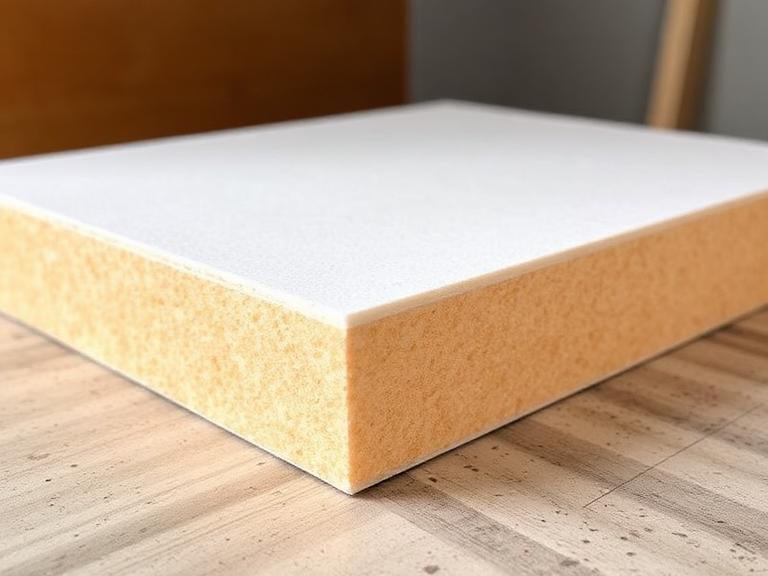
From our experience engineering advanced material solutions, relying on fiberglass in demanding environments is a fundamental design flaw. Fiberglass acts as an air filter, not an air barrier. It allows convective loops to steal heat directly from your controlled environments, and the moment it encounters moisture, its insulating properties collapse entirely. In contrast, rigid foam board insulation—whether Expanded Polystyrene (EPS), Extruded Polystyrene (XPS), or Polyisocyanurate (Polyiso)—provides a monolithic, structural, and moisture-resistant barrier that fundamentally outperforms legacy glass fiber products.
In this authoritative technical guide, we will brutally dismantle the arguments keeping outdated insulation alive. We will analyze the strict differences in thermal resistance, moisture management, and structural integrity, proving exactly why rigid foam board is the superior choice for any project that demands uncompromising efficiency and durability.
About Sjcncinsulation: Sjcncinsulation is a modern manufacturing enterprise specializing in the production, processing, sales, and service of insulation materials and plastic sheets. The company is located in Houqiao Industrial Park, Xinwu District, Wuxi City, Jiangsu Province, China. We are supported by a young and highly skilled team of engineers with strong R&D capabilities, as well as a professional sales team.
Table of Contents
- 1. The Thermal Resistance Reality: R-Value Breakdown
- 2. Moisture Management: Why Fiberglass Fails in Damp Environments
- 3. Structural Integrity, Settling, and Air Infiltration
- 4. Evaluating Costs: Upfront Investment vs. Long-Term Value
- 5. Advanced Engineering Contexts: Specialized Composite Integration
- 6. Summary Matrix: Rigid Foam vs. Fiberglass
- 7. Frequently Asked Questions (FAQs)
- 8. Authoritative References
1. The Thermal Resistance Reality: R-Value Breakdown
The primary metric used to evaluate any insulation material is its R-value, which measures the capacity to resist heat flow. Traditional fiberglass batts offer an R-value hovering around R-3.1 to R-3.4 per inch of thickness. However, this number is highly deceptive. Fiberglass only achieves this laboratory-rated R-value if it is installed flawlessly, completely uncompressed, and in an environment with zero air movement. In the real world, installers stuff fiberglass behind wires, compress it into tight corners, and leave gaps around outlet boxes. The moment fiberglass is compressed, it loses its ability to trap the tiny air pockets that provide its insulation, causing the actual installed R-value to plummet.
Rigid foam boards operate on an entirely superior plane of physics. Extruded Polystyrene (XPS) delivers roughly R-5.0 per inch, while foil-faced Polyisocyanurate (Polyiso) can achieve an astonishing R-6.5 per inch. Furthermore, rigid foam does not lose its thermal resistance when handled. Because it is a solid panel, it guarantees a consistent, mathematically predictable thermal barrier. We recommend continuous insulation (CI) strategies using rigid foam on the exterior of building envelopes specifically to break the thermal bridging caused by wooden or steel studs—a structural weakness that fiberglass placed between studs entirely fails to address.
Therefore, when asking is rigid foam board better than fiberglass from a purely thermal perspective, the answer is absolute. Foam boards provide higher resistance per inch and maintain that resistance in real-world application.
2. Moisture Management: Why Fiberglass Fails in Damp Environments
Water is the absolute enemy of thermal efficiency. Herein lies the most catastrophic failure of traditional fiberglass: it behaves like a massive sponge. When warm, moist air travels through fiberglass and hits a cold surface, condensation occurs deep within the fiberglass matrix. Once the spun glass fibers become saturated with water, the material’s thermal resistance drops to near zero. Worse, wet fiberglass takes incredibly long to dry out, creating the perfect dark, damp breeding ground for toxic black mold and structural wood rot.
Conversely, closed-cell rigid foam boards are inherently hydrophobic. Materials like XPS are frequently used below grade against foundation walls precisely because they repel liquid water and block vapor transmission. You can submerge a panel of XPS underwater, pull it out, and it will still insulate perfectly. In high-humidity industrial manufacturing settings, relying on porous materials is a severe liability. If your facility requires strictly controlled climate zones, you must look toward advanced rigid paneling. For insights into securing highly moisture-resistant industrial cladding, evaluating the top fiberglass plastic panel suppliers demonstrates how modern plastic and foam composites entirely negate the moisture risks associated with old-fashioned batts.
3. Structural Integrity, Settling, and Air Infiltration
Let us discuss the mechanical degradation of insulation materials over a decade. Fiberglass batts are subject to gravity. Over time, the constant micro-vibrations of a building, combined with minor moisture accumulation, cause fiberglass to slump and settle within wall cavities. This settling leaves the top six to twelve inches of a wall completely uninsulated, creating a massive thermal bypass. Furthermore, fiberglass is highly permeable to air. Wind washing—where outside air blows through the exterior sheathing—easily strips the trapped heat right out of the fiberglass fibers.
Rigid foam board, by its very nature, provides structural stability. It never sags, it never slumps, and it does not settle. When the seams of rigid foam boards are properly taped, the entire assembly acts as an impenetrable air barrier, stopping wind washing and convective loops dead in their tracks. This rigidity is why foam cores are the foundational element in advanced structural composites. This structural superiority is clearly visible when you analyze diverse composite panel applications across the aerospace, marine, and construction industries. Rigid cores provide shear strength to a wall assembly, actively contributing to the physical integrity of the structure, whereas fiberglass is nothing more than inert fluff.
4. Evaluating Costs: Upfront Investment vs. Long-Term Value
The sole defense continuously offered by fiberglass advocates is price. It is undeniably true that buying rolls of fiberglass is cheaper at the checkout counter than purchasing pallets of specialized Polyiso or XPS foam boards. However, making engineering or architectural decisions based strictly on upfront material costs is a hallmark of amateur project management. The true cost of insulation must be calculated over a twenty-year operational lifecycle.
Because fiberglass allows for air infiltration and thermal bridging, the ongoing HVAC energy costs required to heat or cool the space will rapidly eclipse the initial savings. We recommend utilizing strict lifecycle cost analysis. When you evaluate an advanced building envelope, the overall structurally insulated panel cost—which relies heavily on rigid foam cores—often proves more economical over a decade due to drastically reduced energy consumption and the elimination of complex house-wrap labor. Similarly, in industrial processing plants, comparing the long-term lifecycle metrics in an epoxy sheet price analysis reveals that paying a premium for rigid, impervious materials prevents catastrophic maintenance and replacement costs down the line.
If you need lightweight but highly rigid insulation for transport or modular applications, checking the fiberglass honeycomb panels cost will show you the exact financial threshold where advanced rigid core materials become vastly superior to traditional alternatives in terms of weight-to-strength ratios.
5. Advanced Engineering Contexts: Specialized Composite Integration
While discussing whether is rigid foam board better than fiberglass, we must acknowledge that in extreme industrial, electrical, or high-temperature environments, basic residential-grade foam boards are insufficient. When thermal insulation must also provide massive dielectric strength and resistance to extreme chemical degradation, engineers must move past basic polystyrene and look toward advanced thermosetting composites.
For applications involving high-voltage switchgear, electrical transformers, or heavy rail transit, standard insulation melts or fails structurally. This is where Sheet Molding Compound (SMC) becomes mandatory. If you are engineering systems that demand uncompromising thermal, electrical, and flame-retardant properties, you must specify smc composite materials. As an industry-leading smc insulation board supplier, Sjcncinsulation engineers boards that withstand extreme mechanical stress and high-temperature arcs that would instantly vaporize standard rigid foams and fiberglass alike. In these elite industrial contexts, material selection moves from simple climate control to critical operational safety.
6. Summary Matrix: Rigid Foam vs. Fiberglass
To provide absolute clarity for your procurement and engineering teams, we have constructed a definitive comparison matrix outlining the brutal realities of both materials under real-world stress conditions.
| Performance Metric | Rigid Foam Board (XPS/EPS/Polyiso) | Traditional Fiberglass Batts |
|---|---|---|
| Thermal Resistance (R-Value) | R-4.0 to R-6.5 per inch. Maintains value. | R-3.1 to R-3.4 per inch. Drops drastically if compressed. |
| Moisture Permeability | Closed-cell variants are highly hydrophobic and repel water. | Acts as a sponge. Loses all insulation value when wet. |
| Air Infiltration Control | When taped, creates a perfect, impenetrable air barrier. | Highly porous. Allows severe convective heat loss and wind washing. |
| Structural Stability | Monolithic panels never settle, sag, or slump over time. | Subject to gravity; sags within walls, leaving massive thermal voids. |
| Lifecycle Economics | Higher initial cost, but yields massive long-term HVAC energy savings. | Cheap upfront, but guarantees higher monthly energy bills permanently. |
7. Frequently Asked Questions (FAQs)
Can I use rigid foam board and fiberglass together in the same wall assembly?
From our experience, this hybrid approach—often called a “flash and batt” or exterior foam with interior fiberglass system—is highly effective if engineered correctly. We recommend placing a thick layer of rigid foam board on the exterior of the building sheathing to stop thermal bridging and push the dew point outside the wall cavity. You can then safely place cheaper fiberglass inside the stud cavities. However, you must meticulously calculate the foam thickness to ensure condensation does not form inside the wall, which would instantly ruin the fiberglass.
Is rigid foam board better than fiberglass for soundproofing a room?
This is the one specific area where standard fiberglass (or mineral wool) actually outperforms standard rigid foam. Sound waves require mass and porous, irregular fibers to dissipate acoustic energy. The dense, drum-like surface of rigid foam boards can actually reflect sound rather than absorb it. If your primary engineering goal is acoustic deadening between interior walls rather than thermal resistance, heavy-density fiberglass or rock wool is the superior choice.
Do bugs and rodents prefer rigid foam or fiberglass to nest in?
Neither material is insect-proof by default, but their vulnerabilities differ. Mice and rats absolutely love fiberglass; it provides a warm, soft, easily manipulated material to build massive nests. Rigid foam board (particularly EPS) is vulnerable to tunneling from carpenter ants and termites, who do not eat the foam but will chew through it to create pathways to wood. We highly recommend using foam boards that have been treated with borate during the manufacturing process, which aggressively deters insect tunneling.
8. Authoritative References
To validate the thermodynamic claims, moisture control physics, and material lifecycle metrics discussed in this engineering audit, we strongly advise consulting the following definitive regulatory and scientific resources:
- U.S. Department of Energy (DOE) – Insulation Materials Guide: The federal authority providing empirical data on R-values, thermal bridging prevention, and the physical characteristics of Polyisocyanurate, XPS, and EPS foam boards versus legacy spun glass materials.
- Building Science Corporation (BSC) – Understanding Vapor Barriers: A premier architectural engineering research group offering peer-reviewed analysis on how moisture vapor transmission rates (MVTR) affect different insulation media and cause catastrophic failures in porous batts.