When engineering high-voltage electrical equipment, the margin for error is absolutely zero. A single insulation failure can lead to catastrophic short circuits, equipment destruction, and extreme safety hazards. As an experienced epoxy fiberglass rod supplier, we constantly see procurement managers and engineers struggling to balance mechanical strength with dielectric reliability. In most professional situations, there is one material that consistently solves these complex challenges: the FR4 fiberglass rod.
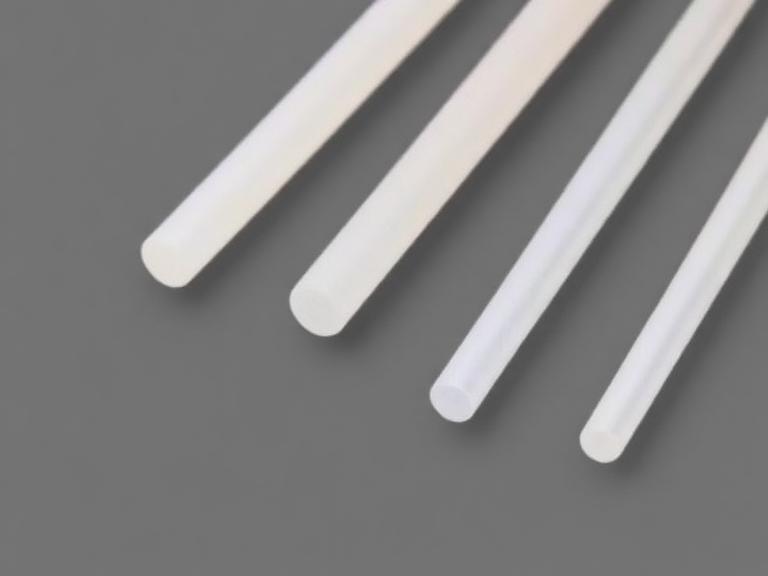
While many are familiar with FR4 in the context of printed circuit boards, its extruded or rolled rod form is a powerhouse in heavy electrical infrastructure. This guide will take a clear, opinionated position on the primary Applications of FR4 Fiberglass Rods, bypassing the generic textbook summaries to provide you with commercial and practical judgment for your next engineering project.
Quick Answer: What are the main applications of FR4 Fiberglass Rods?
The core Applications of FR4 Fiberglass Rods revolve around environments requiring high mechanical strength, absolute electrical isolation, and strict UL94 V-0 flame retardancy. The top applications are:
- High-voltage insulators and standoffs in substations.
- Structural supports and spacers inside dry-type transformers.
- Slot wedges and end laminations for industrial electric motors.
- Busbar supports in heavy-duty switchgear.
- Non-conductive test probe handles for electronic diagnostic equipment.
- Antenna structural supports in telecommunications and RF environments.
- Arc shields and operating shafts within high-voltage circuit breakers.
If you require a structural component that will not conduct electricity and will self-extinguish in a fire, FR4 is the definitive commercial choice.
Table of Contents
- What It Is: The Engineering Behind FR4
- How It Works in Electrical Environments
- The 7 Critical Applications of FR4 Fiberglass Rods
- Commercial Benefits of Specifying FR4
- Limitations to Consider
- Who Should Use It & Who Does Not Need It
- Common Procurement Mistakes
- Strategic Buying Considerations
- Summary & Comparison Tables
- Expert Recommendation
- The Bottom Line
- Frequently Asked Questions
What It Is: The Engineering Behind FR4
FR4 is a composite material consisting of a continuous woven glass fabric reinforcement bound together by an electrical-grade epoxy resin. The “FR” stands for Flame Retardant, and the “4” denotes its specific class of glass epoxy. To manufacture these rods, the woven fiberglass is impregnated with the epoxy resin (which contains bromine to achieve flame retardancy) and is then heated and rolled under immense pressure into solid cylindrical forms.
We often have to clarify the difference between standard G10 and FR4 to our clients. If you study G10 material properties, you will see it is nearly identical mechanically to FR4. However, G10 is not flame retardant. In modern electrical engineering, substituting G10 for FR4 where a fire rating is required is a major compliance failure.
How It Works in Electrical Environments
FR4 fiberglass rods work by providing dual-action protection: mechanical rigidity and dielectric isolation. The dense fiberglass matrix provides a tensile strength of over 38,000 PSI, allowing the rod to bear heavy physical loads without warping or creeping over time. Simultaneously, the cured epoxy resin prevents the flow of electrical current, boasting a dielectric strength of roughly 800 volts per mil.
Crucially, because of its extremely low water absorption rate (typically 0.10% over 24 hours), the material maintains these insulating properties even in highly humid environments. If a fault occurs and an electrical arc generates extreme heat, the bromine within the epoxy matrix starves the fire of oxygen, allowing the rod to self-extinguish immediately upon removal of the heat source.
The 7 Critical Applications of FR4 Fiberglass Rods
From our experience working with global equipment manufacturers, here are the most effective and commercially viable Applications of FR4 Fiberglass Rods.
1. High-Voltage Insulators and Standoffs
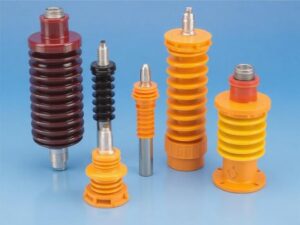
In power distribution systems, live conductors must be physically separated from grounded metal enclosures. FR4 rods are CNC-machined into standoffs and insulators because they can support the heavy weight of copper cabling while completely preventing high-voltage current from tracking to the chassis.
2. Transformer Structural Supports and Spacers
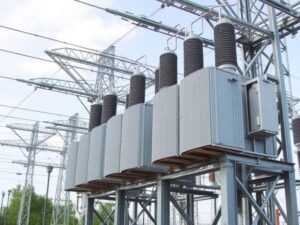
Dry-type transformers experience immense magnetic forces and thermal stress during operation. FR4 rods are utilized as structural tie rods and internal spacers between the copper windings. They do not distort under continuous heat (up to 130 degrees Celsius) and ensure the physical geometry of the transformer remains intact without inducing eddy currents.
3. Motor and Generator Slot Wedges
For heavy-duty applications in industrial electric motors, securing the copper coils inside the stator slots is vital. FR4 rods are often milled into custom slot wedges. Their high flexural strength prevents the coils from vibrating loose at high RPMs, while their insulation properties prevent the coils from shorting against the steel stator core.
4. Switchgear Components and Busbar Supports
Inside medium and high-voltage switchgear cabinets, massive copper busbars route power. During a short circuit, electrodynamic forces try to violently violently push the busbars apart. FR4 rods act as mechanical braces. They are strong enough to withstand thousands of pounds of instantaneous force while maintaining electrical separation.
5. Test Fixtures and Probe Handles
When technicians perform diagnostics on live electronic equipment, they require absolute protection from electrocution. FR4 rods are commonly machined into the shafts and handles of high-voltage test probes. The material machines exceptionally well, allowing for precision threading and ergonomic shaping.
6. Telecommunications and RF Antenna Supports
In the telecom sector, specifically with radio frequency (RF) equipment, structural components must not interfere with signal transmission. FR4 has a low dielectric constant and low dissipation factor, making it an excellent structural support for antennas and radome enclosures where signal transparency is critical.
7. Arc Shields and Circuit Breaker Shafts
Large industrial circuit breakers require mechanical linkages to physically open and close the contacts. These operating shafts must transfer mechanical torque from the handle to the live contacts without transferring electricity back to the operator. FR4 rods provide the necessary torsion strength and serve as superior arc shields compared to older, brittle ceramic materials.
Commercial Benefits of Specifying FR4
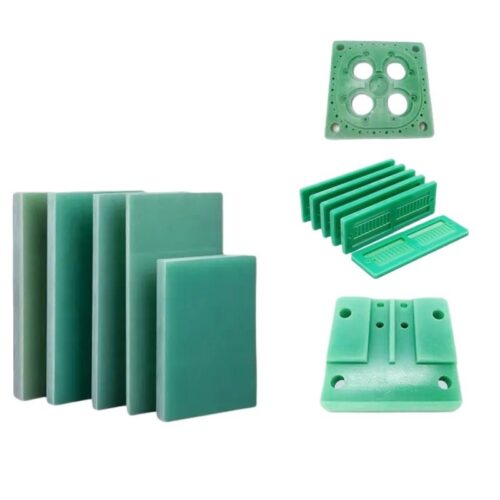
Why do we recommend FR4 over cheaper alternatives? The primary commercial benefit is risk mitigation. When you buy from reputable epoxy fiberglass sheet manufacturers or rod suppliers, you are guaranteeing that your equipment passes rigorous UL, CE, and RoHS certifications.
FR4 is dimensionally stable; it does not shrink or expand significantly with temperature changes, meaning your tightly toleranced assemblies will not loosen over a 20-year lifespan. Furthermore, it outlasts traditional phenolic materials in damp environments, eliminating the cost of frequent maintenance replacements.
Limitations to Consider
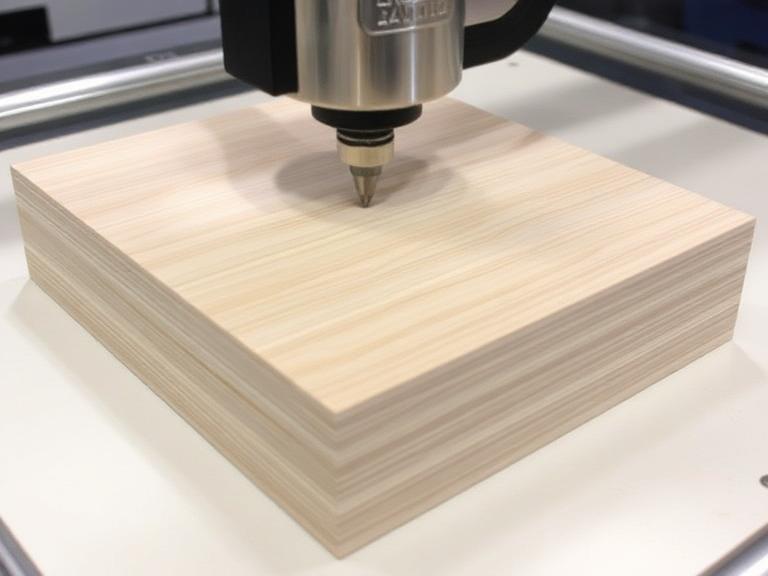
We believe in absolute transparency. FR4 is not perfect for every scenario. It is highly abrasive. When machining FR4 rods, the glass fibers will destroy standard high-speed steel (HSS) cutting tools within minutes; you must use carbide or diamond-tipped tooling and proper dust extraction systems.
Additionally, FR4 is not UV stable. If used outdoors without a protective coating, ultraviolet light from the sun will break down the epoxy matrix over time, leading to “blooming” where the raw fiberglass becomes exposed. Finally, it has a continuous operating temperature limit of roughly 130 to 140 degrees Celsius. If your application exceeds this, you must upgrade to G11 or a polyimide-based material.
Who Should Use It & Who Does Not Need It
For commercial users and electrical OEMs: If you are manufacturing power grids, switchgear, medical MRI machines, or aerospace avionics, FR4 rods are an absolute necessity. You cannot compromise on flame retardancy and dielectric strength.
Who does not need it: If you are building low-voltage consumer goods, basic mechanical jigs that do not involve electricity, or temporary prototypes, FR4 is an unnecessary expense. You would be better served evaluating lower-cost options through an insulation board manufacturer or looking into standard Delrin or Nylon rods.
Common Procurement Mistakes
In our testing and daily interactions with buyers, the most common mistake is confusing FR4 with standard phenolic cotton or paper rods. Buyers often look at a phenolic resin sheet suppliers catalog and assume all brown or green insulating rods are the same. Phenolic rods are significantly weaker mechanically and absorb much more moisture than FR4 glass epoxy. Using a phenolic rod where an FR4 rod is specified will lead to mechanical shearing under heavy load.
Another mistake is failing to specify the exact diameter tolerances required. Because FR4 is rolled and cured, the outer surface can sometimes vary. If your application requires the rod to slide precisely into a bearing or a tight housing, you must request “centerless ground” FR4 rods from your supplier.
Strategic Buying Considerations
When preparing to source FR4 rods, evaluate the total cost of ownership. Do not just look at the raw material price. If you are comparing the fiberglass sheets 4×8 price or rod pricing across vendors, demand material data sheets. Verify that the material actually meets MIL-I-24768/27 standards.
Partner with top-tier fr4 sheet manufacturers and rod suppliers who have dedicated CNC capabilities. Purchasing pre-machined standoffs directly from the manufacturer is almost always more cost-effective than buying raw rods and destroying your own tooling trying to machine them in-house.
Summary & Comparison Tables
Quick Summary Table: FR4 Material Profile
| Property | FR4 Specification | Engineering Benefit |
|---|---|---|
| Tensile Strength | > 38,000 PSI | Bears heavy structural loads without snapping. |
| Dielectric Strength | ~ 800 Volts/Mil | Prevents high-voltage arcing and short circuits. |
| Water Absorption | < 0.10% (24 hrs) | Maintains electrical insulation in humid environments. |
| Flammability Rating | UL94 V-0 | Self-extinguishes, preventing catastrophic electrical fires. |
Comparison Table: FR4 vs. G10 vs. Phenolic Rods
| Feature | FR4 Fiberglass Rod | G10 Fiberglass Rod | CE Canvas Phenolic Rod |
|---|---|---|---|
| Resin Base | Epoxy (Brominated) | Epoxy (Non-Brominated) | Phenolic |
| Flame Retardant | Yes (UL94 V-0) | No | No |
| Mechanical Strength | Excellent | Excellent | Moderate |
| Moisture Resistance | Excellent | Excellent | Poor to Moderate |
| Relative Cost | High | Medium – High | Low |
For a broader view of how these fit into your supply chain, we highly recommend reviewing our comprehensive electrical insulation sheet materials guide.
Pros and Cons Table: Utilizing FR4 Rods
| Pros of FR4 Rods | Cons of FR4 Rods |
|---|---|
| Exceptional dielectric strength protects high-voltage systems. | Highly abrasive dust requires specialized carbide tooling to machine. |
| UL94 V-0 flame retardant rating guarantees regulatory compliance. | Not UV stable; degrades when exposed to direct sunlight outdoors. |
| Maintains structural and electrical integrity in high humidity. | Higher raw material cost compared to standard plastics or phenolics. |
| Low thermal expansion ensures tight tolerances remain stable. | Temperature limited to 130°C – 140°C continuous operation. |
Expert Recommendation
The SjcncinSulation Engineering Verdict
In most professional situations involving high-voltage electrical equipment, we recommend FR4 fiberglass rods as the default engineering standard. Do not attempt to save pennies by substituting G10 or phenolic rods in switchgear or transformer applications. The liability of a non-flame-retardant material catching fire during an electrical arc fault far outweighs the initial savings. We strongly advise our clients to source centerless ground FR4 rods if their applications involve tight sliding tolerances, and to always utilize a supplier capable of providing strict batch certification.
The Bottom Line
The Applications of FR4 Fiberglass Rods extend far beyond the circuit board. In the heavy electrical industry, they are the structural backbone that keeps high-voltage electricity safely contained. By offering an unmatched combination of tensile strength, moisture resistance, dielectric isolation, and UL94 V-0 flame retardancy, FR4 rods remain the gold standard for engineers designing safe, reliable, and compliant modern electrical infrastructure.
Frequently Asked Questions
Without a protective coating, no. The epoxy resin in FR4 is not UV stable. Prolonged exposure to direct sunlight will cause the epoxy to degrade and chalk, exposing the fiberglass matrix and severely reducing its mechanical and electrical properties.
No. While they share identical physical and electrical properties under normal conditions, FR4 contains brominated flame retardants, making it self-extinguishing (UL94 V-0 rated). G10 does not contain these retardants and will sustain a flame. FR4 can safely replace G10, but G10 cannot safely replace FR4.
Due to the highly abrasive nature of the glass fibers, you must use solid carbide, diamond-coated, or polycrystalline diamond (PCD) tooling. Standard high-speed steel tools will dull almost instantly. Additionally, proper dust extraction is mandatory, as inhaling fiberglass dust is a serious health hazard.
Authoritative Industry References
- National Electrical Manufacturers Association (NEMA) – Standards and definitions for industrial laminates, including G10 and FR4 material classifications.
- Underwriters Laboratories (UL) – Safety organization defining the UL94 V-0 flammability testing standards crucial for electrical insulation compliance.
- ASTM International – Standard test methods (such as ASTM D149 for dielectric breakdown voltage and ASTM D790 for flexural properties) governing the performance of rigid electrical insulating materials.