In the power distribution industry, the core and copper windings of a transformer get all the glory, but the true limiting factor of a transformer’s lifespan is its insulation. When a transformer fails catastrophically, it is rarely a metallurgical failure; it is a dielectric breakdown. Understanding and selecting the Best Electrical Insulation Materials for Transformers is not just a matter of compliance—it is the difference between a unit that lasts 40 years and one that detonates under peak load conditions within five.
At SjcncinSulation, we operate as a modern manufacturing enterprise specializing in the production, processing, and sales of high-performance insulation materials. We do not deal in generic theory. From our experience supplying top-tier engineering firms, we see manufacturers routinely cutting corners by specifying lower-thermal-class materials to save upfront costs, completely ignoring the long-term operational hazards. Taking a clear, opinionated position: if you are manufacturing or refurbishing dry-type or oil-filled transformers, your insulation choices dictate your liability. In this guide, we break down the 12 Best Electrical Insulation Materials for Transformers, explaining exactly what they do, why they work, and whether they are actually worth integrating into your production line.
Quick Answer: The Best Electrical Insulation Materials for Transformers
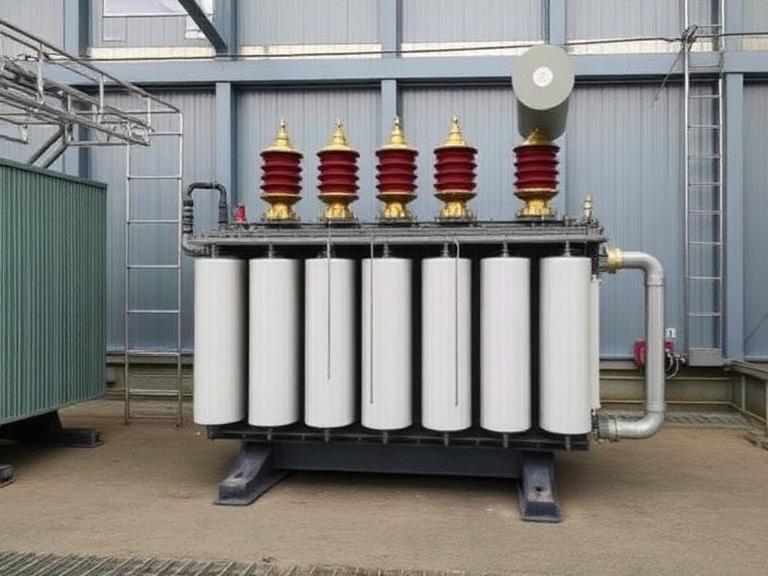
The Best Electrical Insulation Materials for Transformers depend strictly on the transformer type. For oil-filled transformers, Cellulose Kraft Paper and high-density Pressboard remain the undisputed champions due to their exceptional compatibility with mineral oil. For dry-type transformers, FR4 Epoxy Fiberglass, SMC Composite Materials, and Nomex (Aramid paper) are the premier choices because they offer massive mechanical strength and Class F to Class H thermal resistance without the need for liquid coolants. We recommend never mixing thermal classes within a single build; always specify your solid insulation to match or exceed the maximum hotspot temperature of your coils.
Table of Contents
- What It Is: Understanding Transformer Insulation
- How It Works: Dielectric Strength vs. Heat
- The 12 Best Electrical Insulation Materials for Transformers
- Commercial Benefits of Upgrading Materials
- Limitations and Environmental Vulnerabilities
- Who Should Use It & Who Does Not Need It
- Common Engineering Mistakes
- Summary & Comparison Tables
- Buying Considerations for Procurement
- Expert Recommendation from SjcncinSulation
- The Bottom Line
- Frequently Asked Questions
What It Is: Understanding Transformer Insulation
Electrical insulation in a transformer serves two non-negotiable purposes: it prevents short circuits by electrically isolating the conductive copper or aluminum windings from each other and the grounded steel core, and it assists in dissipating the massive thermal energy generated by electrical resistance. The Best Electrical Insulation Materials for Transformers are classified by their Thermal Class (e.g., Class A 105°C, Class F 155°C, Class H 180°C), which dictates the maximum continuous operating temperature the material can withstand before chemical degradation destroys its dielectric properties.
How It Works: Dielectric Strength vs. Heat
How it works is an exercise in applied physics. When high voltage passes through a transformer, it creates an electromagnetic field. Insulation materials act as a dielectric barrier, meaning they resist the flow of electric charge. However, as the transformer operates, I²R losses create heat. If the heat surpasses the thermal limit of the insulation, the material carbonizes. Because carbon is highly conductive, a localized carbonized spot turns an insulator into a conductor, leading directly to a short circuit and an explosive arc flash.
The 12 Best Electrical Insulation Materials for Transformers
In our testing and commercial supply experience, these 12 materials represent the pinnacle of modern transformer insulation technology.
1. Cellulose Paper (Kraft Paper)
Despite centuries of technological advancement, pure unbleached cellulose Kraft paper remains the backbone of oil-filled transformers. It is incredibly inexpensive and, when thoroughly dried and impregnated with transformer oil, its dielectric strength multiplies exponentially. However, its Class A (105°C) thermal limit restricts it strictly to oil-immersed applications.
2. High-Density Pressboard
Pressboard is essentially thick, heavily compressed cellulose. It is used to create structural insulation components like phase barriers, cylinder tubes, and spacing blocks between windings. It provides exceptional mechanical support against short-circuit electro-dynamic forces.
3. FR4 Epoxy Fiberglass
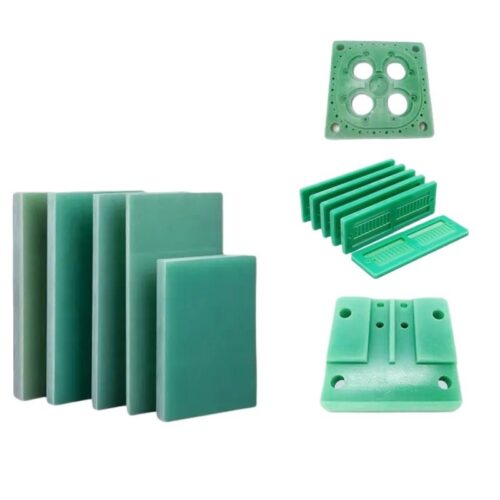
For dry-type transformers, standard cellulose is useless. You must use rigid composites. An fr4 epoxy fiberglass rod or sheet offers incredible mechanical strength, low moisture absorption, and excellent flame retardance. It is the premier choice for terminal supports and core insulation in dry environments.
4. SMC (Sheet Molding Compound)
SMC is a thermoset composite material reinforced with glass fibers. smc composite materials are heavily utilized in the manufacturing of transformer enclosures, arc chutes, and phase barriers due to their high tracking resistance and Class F (155°C) thermal rating.
5. Nomex (Aramid Paper)
Manufactured by DuPont, Nomex is a synthetic aramid polymer. It operates flawlessly at Class C (220°C) temperatures. For traction transformers in trains or heavy-duty industrial dry-type transformers where minimizing weight and maximizing thermal capacity is required, Nomex is the undisputed, albeit expensive, champion.
6. Epoxy Resins (Cast Resin)
In Cast Resin Transformers (CRT), the entire high-voltage winding is vacuum-encapsulated in liquid epoxy resin, which is then cured into a solid block. This makes the transformer completely moisture-proof and highly fire-resistant. Procurement managers should constantly review the epoxy sheet price analysis to manage volatile raw material costs in CRT manufacturing.
7. Mineral Transformer Oil
Liquid insulation is just as critical as solid. Highly refined mineral oil acts as both a dielectric insulator and a coolant, circulating through the core and windings to carry heat away to the exterior radiators.
8. Synthetic and Natural Esters
As the industry moves toward greener alternatives, ester fluids (like Midel) are replacing mineral oil. They offer a significantly higher flash point (increasing fire safety) and are fully biodegradable, making them ideal for ecologically sensitive installations.
9. DDP (Diamond Dotted Presspaper)
DDP is Kraft paper printed with a distinct diamond pattern of B-stage epoxy resin. When the transformer coil is baked during manufacturing, the epoxy melts and cures, permanently gluing the layers of copper and paper together into a rigid, short-circuit-resistant block.
10. Fiberglass Reinforced Plastics (FRP)
FRP materials are utilized for structural supports, such as dog-bones and corner blocks. Before specifying these materials, engineers should consult a comprehensive frp fiberglass reinforced plastic guide to understand the anisotropic load-bearing capabilities of pulled fiberglass profiles.
11. Mica Tape
Mica is unmatched in its ability to resist partial discharge and corona effects. It is wrapped around the individual conductors in extremely high-voltage transformers (e.g., 500kV) to prevent high-frequency electrical stress from eroding the primary insulation.
12. Polyurethane Foam/Resin Composites
While often associated with architectural uses, dense polyurethane composites are increasingly used for structural void filling and vibration dampening inside transformer tanks. Understanding broad composite panel applications helps engineers repurpose these thermal insulators for acoustic dampening in large substations.
Commercial Benefits of Upgrading Materials
The commercial benefit of selecting the Best Electrical Insulation Materials for Transformers is straightforward: extended asset lifecycle and reduced total cost of ownership (TCO). By upgrading from standard Class A cellulose to thermally upgraded paper (Class 120°C) or Nomex, manufacturers can design smaller, lighter transformers that operate at higher capacities. This reduces the amount of expensive copper and grain-oriented silicon steel required, offsetting the higher cost of the premium insulation.
Limitations and Environmental Vulnerabilities
Every material has an Achilles’ heel. In most professional situations, the enemy of cellulose insulation is moisture. If Kraft paper absorbs even 2% moisture by weight, its dielectric strength collapses by half, and its aging rate accelerates by a factor of 10. Conversely, rigid epoxy and SMC materials resist moisture beautifully but are vulnerable to mechanical cracking if subjected to extreme thermal shock during sub-zero cold starts.
Who Should Use It & Who Does Not Need It
For commercial manufacturers and heavy-duty applications: If you are building transformers for data centers, high-rise buildings, or offshore wind farms, you must utilize high-end dry-type materials like Nomex, Cast Epoxy, and smc insulation board. These environments prohibit the use of flammable mineral oil.
Who does not need it: If you are refurbishing rural pole-mounted distribution transformers, spending premium capital on Nomex or advanced FR4 composites is a waste. Standard Kraft paper, DDP, and mineral oil provide the most cost-effective and reliable solution for low-density outdoor environments.
Common Engineering Mistakes
In our testing, the most catastrophic mistake we observe is mismatched thermal systems. A manufacturer will use Class H (180°C) Nomex for the primary winding insulation but use cheap Class B (130°C) fiberglass tape to bind the coils. When the transformer hits peak load, the Nomex survives, but the binding tape melts, causing the coils to shift and short circuit. An insulation system is only as strong as its lowest-rated component.
Summary & Comparison Tables
Quick Summary Table: Top Insulation Materials
| Insulation Material | Thermal Class | Primary Application | Moisture Resistance |
|---|---|---|---|
| Kraft Paper / Pressboard | Class A (105°C) | Oil-Filled Transformers | Poor (Requires Drying) |
| FR4 Epoxy Fiberglass | Class F (155°C) | Dry-Type Core & Supports | Excellent |
| Nomex (Aramid) | Class C (220°C+) | High-Temp Dry-Type | Good |
| SMC Composites | Class F (155°C) | Phase Barriers & Enclosures | Excellent |
Comparison Table: Solid vs. Liquid Insulation
| Feature | Solid Insulation (Epoxy/SMC/FRP) | Liquid Insulation (Mineral Oil/Esters) |
|---|---|---|
| Cooling Capability | Poor (Relies on air convection) | Excellent (Circulates heat to radiators) |
| Maintenance Needs | Nearly Zero Maintenance | High (Requires oil testing and filtering) |
| Fire Risk | Very Low (Self-extinguishing) | Moderate to High (Flash point dependent) |
| Ideal Environment | Indoor, Data Centers, High-Rises | Outdoor Substations, Industrial Plants |
Buying Considerations for Procurement
When sourcing the Best Electrical Insulation Materials for Transformers, procurement teams must balance dielectric performance with global supply chain costs. If you are ordering structural composite panels, you must secure aggressive pricing without sacrificing density. We highly recommend reviewing resources like the structurally insulated panel cost analysis to forecast budget requirements accurately.
Furthermore, ensure you are buying directly from primary manufacturers rather than trading intermediaries. Evaluating the fiberglass plastic panel suppliers ensures you are receiving certified materials that comply with strict IEC and IEEE standards, rather than off-spec generic fiberglass that delaminates under high electrical stress.
Pros and Cons Table: Advanced Composites (FR4/SMC) vs. Legacy Cellulose
| Pros of Advanced Composites | Cons of Advanced Composites |
|---|---|
| High thermal thresholds (Class F to H). | Significantly higher initial procurement cost. |
| Immune to moisture absorption and humidity. | Rigid nature makes it difficult to wrap complex coil shapes. |
| Exceptional mechanical strength against short circuits. | Cannot be easily recycled compared to natural cellulose. |
| Eliminates the need for flammable oil tanks. | Heavier than paper, increasing total dry weight. |
Expert Recommendation from SjcncinSulation
The Manufacturer’s Verdict
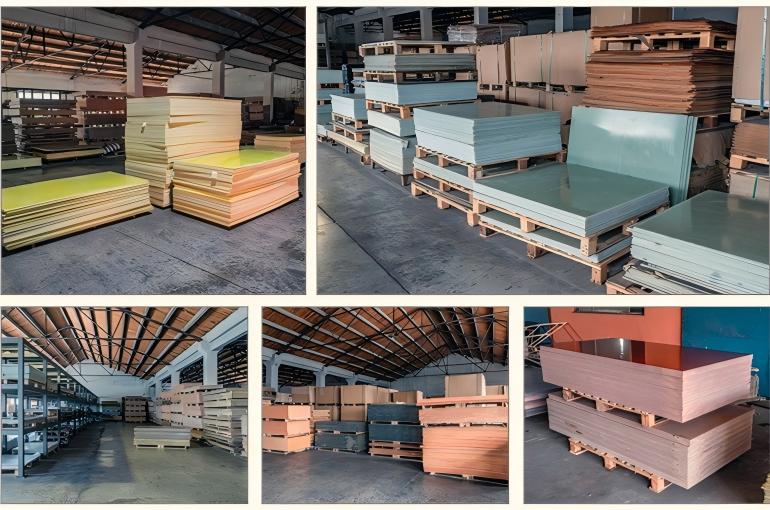
In most professional situations, the transition from oil-filled to dry-type transformers in urban infrastructure is inevitable due to strict fire safety codes. We recommend that transformer manufacturers aggressively upgrade their supply chains to integrate high-performance FR4 and SMC composites. At SjcncinSulation, our young, highly skilled engineering team leverages strong R&D capabilities to produce these exact materials. We do not compromise on resin density or glass fiber ratios. If you are building cast-resin or dry-type transformers, deploying our certified fiberglass and epoxy sheets ensures your units will effortlessly pass rigorous impulse and short-circuit testing protocols.
The Bottom Line
Secure Your Grid with Superior Materials
Selecting the Best Electrical Insulation Materials for Transformers is the single most critical engineering decision in power distribution manufacturing. Clinging to outdated, low-class insulation to save marginal costs upfront guarantees catastrophic failure in the field. By matching the thermal class of your insulation to the specific operating environment—whether relying on highly refined DDP for oil units or deploying indestructible FR4 and SMC composites for dry-type units—you ensure absolute dielectric integrity, maximize operational lifespan, and protect your commercial liability.
Frequently Asked Questions
These classes denote the maximum continuous operating temperature the insulation can safely withstand. Class A insulation (like standard Kraft paper) is rated for 105°C. Class H insulation (like Nomex or advanced silicone resins) can withstand 180°C. Operating a material above its thermal class rapidly accelerates chemical degradation and failure.
Cellulose is highly hygroscopic, meaning it absorbs moisture from the air. Water is highly conductive. If wet paper is placed inside a high-voltage transformer, it will cause an immediate dielectric breakdown. The paper must be baked in a vacuum oven to reduce moisture content below 0.5% before it is impregnated with oil.
Yes. While FR4 is predominantly the star of dry-type transformers, it is perfectly compatible with transformer mineral oil. It is frequently used in oil-filled units for structural supports, terminal blocks, and tap changer components because it provides massive mechanical rigidity without contaminating the oil.
Authoritative Industry References
- Institute of Electrical and Electronics Engineers (IEEE) – IEEE C57.12.00 Standard General Requirements for Liquid-Immersed Distribution, Power, and Regulating Transformers.
- International Electrotechnical Commission (IEC) – IEC 60076 standards detailing the thermal and dielectric testing protocols for power transformers.
- National Electrical Manufacturers Association (NEMA) – Comprehensive industrial standards defining thermal classifications and material specifications for electrical insulation and composite materials.