When engineering high-voltage switchgear, aerospace components, or demanding structural insulating parts, material failure is not just an inconvenience; it is a catastrophic safety hazard. Far too often, procurement teams default to standard phenolic resins or basic plastics, only to experience severe dielectric breakdown or mechanical delamination under thermal stress. The industrial solution to these extreme conditions is the Epoxy Glass Fiber Laminate Sheet. Known colloquially in engineering circles by its NEMA grades—such as FR-4 or G-10—this material represents the apex of electrical insulation and mechanical rigidity.
From our experience engineering advanced insulation solutions, understanding exactly what this material is, how it behaves under CNC machining, and where it justifies its cost is critical. You cannot simply substitute an Epoxy Glass Fiber Laminate Sheet with standard fiberglass panels and expect the same arc resistance or dimensional stability. In this practitioner-level guide, we bypass the generic definitions to deliver commercial and practical judgment, helping you make a definitive usage and buying decision for your structural and electrical applications.
Quick Answer: The Engineering Verdict
An Epoxy Glass Fiber Laminate Sheet is an advanced composite material manufactured by impregnating continuous woven electronic-grade glass fiber cloth with a thermosetting epoxy resin, which is then cured under high temperature and extreme hydraulic pressure. It offers unparalleled dielectric strength, near-zero water absorption, and immense structural rigidity. If you are manufacturing high-voltage electrical transformers, precision printed circuit boards (PCBs), or heavy-duty mechanical gaskets, you must use this material. However, for low-voltage, non-structural consumer enclosures, it is commercially over-engineered and unnecessarily expensive.
Table of Contents
- What It Is: The Anatomy of the Laminate
- How It Works: The Manufacturing Reality
- Quick Summary Table
- The Commercial and Engineering Benefits
- Inherent Limitations and Machining Challenges
- Who Should Use It (And Who Does Not Need It)
- Pros and Cons Analysis
- Comparison Table: Epoxy Glass Fiber vs. Alternatives
- Common Mistakes in Machining and Sourcing
- Buying Considerations for Commercial Users
- Expert Recommendation: Sourcing with Sjcncinsulation
- The Bottom Line
- Frequently Asked Questions (FAQs)
What It Is: The Anatomy of the Laminate
To understand the superiority of an Epoxy Glass Fiber Laminate Sheet, you must examine its core components. Unlike standard consumer plastics that are injection-molded, this material is a highly engineered composite. It consists of two primary elements: a reinforcement substrate and a binding matrix. If you look at an frp fiberglass reinforced plastic guide, you will notice that the reinforcement dictates the tensile strength, while the resin dictates the thermal and electrical resistance.
In this specific laminate, the reinforcement is an electronic-grade (E-glass) woven fiberglass cloth. The matrix is a flame-retardant epoxy resin binder. The most common iteration of this material is NEMA grade FR-4 (Flame Retardant 4). When engineers ask about the specific fiberglass reinforced plastics types, the epoxy variant stands out because the cross-linked molecular structure of the cured epoxy makes the final sheet impervious to chemical degradation and severe heat, maintaining its mechanical integrity well past 130°C to 150°C (depending on the exact formulation).
How It Works: The Manufacturing Reality
The performance of an Epoxy Glass Fiber Laminate Sheet is directly tied to how it is manufactured. It is not poured or extruded. The process begins by running continuous rolls of E-glass fabric through a bath of liquid epoxy resin. The saturated fabric is then passed through a massive oven to partially cure the resin to a tack-free state, known as “B-stage” prepreg.
These prepreg layers are then cut and stacked. To create a thick sheet, dozens of layers are stacked between polished stainless steel plates in a multi-daylight hydraulic press. The press applies immense heat (often exceeding 170°C) and extreme pressure. This causes the B-stage resin to briefly liquefy, flow perfectly through the glass weave, and permanently cross-link into a solid, infusible “C-stage” thermoset plastic. This highly compressed state is what eliminates microscopic air voids, resulting in the material’s legendary dielectric insulation properties.
Quick Summary Table
| Specification Category | Standard FR-4 / G-10 Epoxy Glass Laminate Data |
|---|---|
| Dielectric Strength | Typically > 20 kV/mm (Making it superior for high-voltage insulation) |
| Flexural Strength | > 340 MPa (Extreme resistance to bending and mechanical load) |
| Water Absorption | < 0.1% (Maintains electrical properties in high-humidity environments) |
| Max Operating Temp | 130°C (Class B) up to 155°C (Class F) depending on specific resin blend |
| Flame Resistance | UL94 V-0 (Self-extinguishing, critical for electrical enclosures) |
The Commercial and Engineering Benefits
In most professional situations, the upfront cost of this material is rapidly justified by its lifecycle performance. First and foremost is its electrical insulation stability. Unlike nylon or standard phenolic boards that absorb ambient moisture and lose their dielectric resistance over time, an Epoxy Glass Fiber Laminate Sheet has a near-zero water absorption rate. This means a switchgear baffle manufactured from this material will not arc and fail during a humid summer monsoon.
Secondly, the dimensional stability is unmatched. Because it is a heavily cross-linked thermoset reinforced with glass, it exhibits virtually zero creep under continuous mechanical load. If you are milling precision electrical insulation sheet materials for heavy transformers, the bolt holes will align perfectly ten years from now, exactly as they did on the day of assembly. It does not warp, shrink, or expand significantly with temperature fluctuations.
Inherent Limitations and Machining Challenges
We must be transparent about the drawbacks. The exact features that make an Epoxy Glass Fiber Laminate Sheet so durable also make it exceptionally hostile to cutting tools. The embedded woven glass acts as a severe abrasive. In our testing, standard High-Speed Steel (HSS) router bits are destroyed within minutes of cutting FR-4. You must use solid carbide or diamond-tipped (PCD) tooling, which significantly increases your fabrication costs.
Furthermore, machining this material produces hazardous, fine glass particulate dust. Fabricators must utilize aggressive high-velocity dust extraction systems and proper respiratory PPE. Delamination—where the layers split apart—is also a severe risk if you use incorrect feed rates, dull tooling, or plunge straight into the material without ramping. Finally, the fiberglass sheets 4×8 price for epoxy variants is substantially higher than standard paper-phenolic (Bakelite) sheets.
Who Should Use It (And Who Does Not Need It)
For commercial users and heavy-duty applications: If you are manufacturing electrical busbar supports, high-current switchgear terminal blocks, precision PCBs, aerospace structural members, or heavy machinery wear pads, you absolutely need an Epoxy Glass Fiber Laminate Sheet. The safety liabilities of using lesser materials in high-voltage environments are too massive to ignore.
Who does not need it: For beginners building basic DIY electronic project boxes, or for commercial users creating low-voltage (under 120V) non-load-bearing partitions, this material is massive overkill. Standard ABS plastic, polycarbonate, or cheap phenolic sheets will serve your purpose without destroying your tooling or your budget.
Pros and Cons Analysis
| Pros of Epoxy Glass Fiber Laminate | Cons and Practical Drawbacks |
|---|---|
| Exceptional dielectric strength prevents high-voltage arcing. | Highly abrasive; requires expensive carbide/diamond tooling to machine. |
| Maintains mechanical rigidity under high thermal loads (up to 150°C). | Produces hazardous, itchy fine glass dust during routing or sawing. |
| Virtually immune to moisture, ensuring stability in damp environments. | Higher raw material cost compared to standard phenolic laminates. |
| UL94 V-0 flame retardant rating (for FR-4 grades). | Prone to edge delamination if incorrect CNC feed/speed rates are applied. |
Comparison Table: Epoxy Glass Fiber vs. Alternatives
| Material Type | Primary Binder / Base | Electrical Insulation | Mechanical Strength | Ideal Use Case |
|---|---|---|---|---|
| Epoxy Glass (FR-4/G-10) | Epoxy Resin / Woven E-Glass | Excellent (>20 kV/mm) | Extreme | High-voltage switchgear, PCBs, structural electrical parts. |
| Phenolic Paper (Bakelite) | Phenolic Resin / Kraft Paper | Moderate | Low to Medium | Low-voltage terminal boards, cheap structural templates. |
| Phenolic Cotton (CE/LE) | Phenolic Resin / Cotton Cloth | Poor to Moderate | Good (Impact Resistant) | Gears, pulleys, heavy wear surfaces (non-electrical). |
| Polyester Glass (GPO-3) | Polyester / Glass Mat | Good (High Arc Resistance) | Moderate to High | Phase barriers, standard electrical supports (cheaper than FR-4). |
Common Mistakes in Machining and Sourcing
The most frequent failure we see in the field is procurement managers attempting to save money by purchasing uncertified materials. The global market is flooded with inferior laminate sheets that claim FR-4 compliance but lack the proper epoxy cross-linking. When these cheap sheets are exposed to high continuous voltages, they experience dielectric breakdown and catch fire. You must review the fiberglass sheets cost guide to understand realistic baseline pricing; if a supplier is offering material at half the market rate, they are compromising on the resin quality.
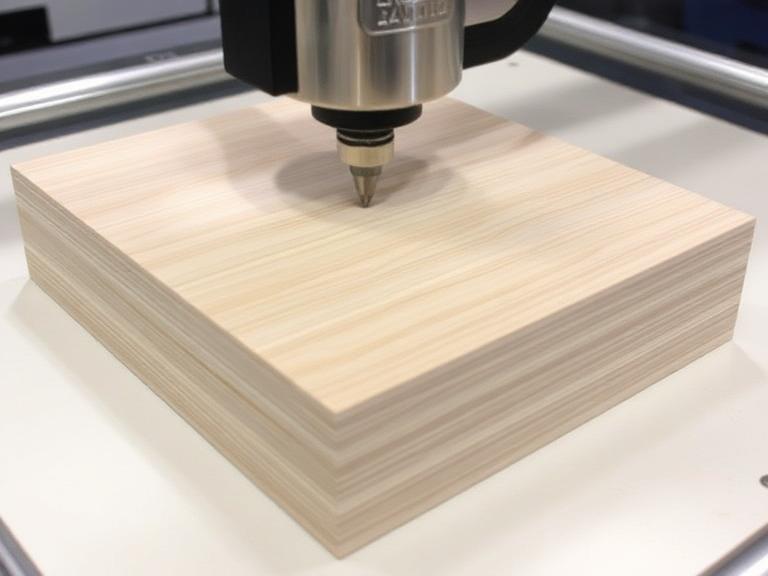
On the shop floor, the most common mistake is improper CNC parameter setup. Machinists often run router bits too fast while plunging too slowly, causing immense heat buildup that melts the epoxy binder and frays the glass fibers. To properly machine an Epoxy Glass Fiber Laminate Sheet, you must utilize climb milling, sharp carbide compression bits, and aggressive feed rates to evacuate the abrasive chips before they generate friction heat.
Buying Considerations for Commercial Users
When you prepare to issue a purchase order, do not simply ask for a “fiberglass sheet.” You must be highly specific about your engineering requirements. If you require round stock for standoff insulators, you must specifically source an fr4 epoxy fiberglass rod, as the manufacturing process for continuous rods differs slightly from flat sheet pressing.
Consider the thickness tolerance. In multi-layer pressing, thickness can vary across a large 4×8 sheet. For precision applications, demand tight tolerance certifications. Furthermore, verify the Glass Transition Temperature (Tg). Standard FR-4 has a Tg around 130°C, but if your application sits next to a heavy industrial furnace, you must source a High-Tg variant (170°C+) to prevent the material from softening. Finding reliable epoxy fiberglass sheet manufacturers who can provide verifiable laboratory test reports for these metrics is non-negotiable.
Expert Recommendation: Sourcing with Sjcncinsulation
Why Vertically Integrated Manufacturing Matters
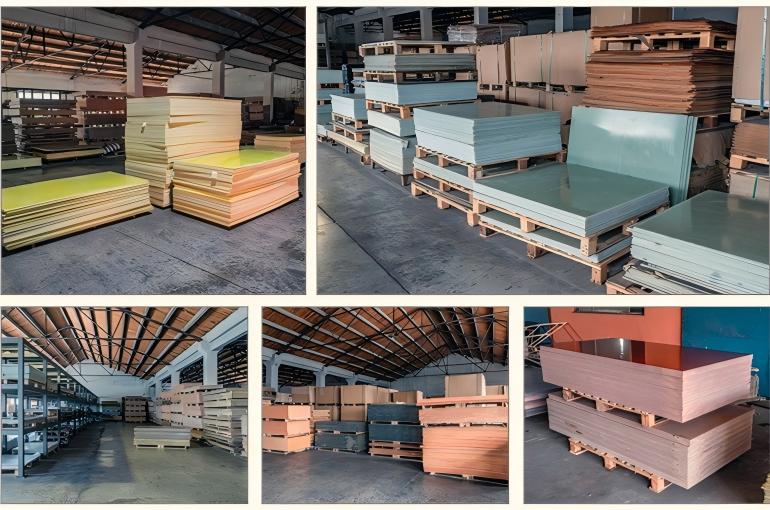
In our experience, buying insulation materials through third-party brokers inevitably leads to supply chain delays, inconsistent material batches, and inflated pricing. We recommend partnering directly with a source manufacturer that controls the entire production and machining process.
Sjcncinsulation is a modern manufacturing enterprise specializing in the production, processing, sales, and service of insulation materials and plastic sheets. The company is located in Houqiao Industrial Park, Xinwu District, Wuxi City, Jiangsu Province, China. We are supported by a young and highly skilled team of engineers with strong R&D capabilities, as well as a professional sales team. By operating as a premier insulation board manufacturer and sitting among the top fiberglass plastic panel suppliers, Sjcncinsulation ensures that every Epoxy Glass Fiber Laminate Sheet delivered meets strict dimensional tolerances and uncompromising dielectric standards, allowing your engineering teams to build with absolute confidence.
The Bottom Line
Final Engineering Verdict
An Epoxy Glass Fiber Laminate Sheet is an indispensable cornerstone of modern electrical and mechanical engineering. It bridges the gap between high mechanical load-bearing capacity and extreme high-voltage insulation. While it demands specialized carbide tooling and rigorous dust control protocols to machine properly, its ability to absolutely prevent electrical arcing in humid, hot, and highly stressed environments makes it worth every penny. Stop risking catastrophic equipment failure with cheap phenolic alternatives; invest in authentic FR-4/G-10 laminates for any critical infrastructure application.
Frequently Asked Questions (FAQs)
Is FR-4 the exact same thing as an Epoxy Glass Fiber Laminate Sheet?
FR-4 is a specific NEMA grade of Epoxy Glass Fiber Laminate. The “FR” stands for Flame Retardant. While G-10 is also an epoxy glass laminate, it lacks the specific bromine-based flame retardant chemicals found in FR-4. Today, FR-4 has largely replaced G-10 in most commercial applications due to its superior UL94 V-0 safety ratings.
Can I cut this material with a standard woodworking table saw?
Technically yes, but it is highly discouraged. A standard steel or basic carbide-tipped woodworking blade will dull incredibly fast due to the abrasive glass fibers. Furthermore, a table saw will generate massive amounts of hazardous glass dust and likely cause severe edge chipping. Commercial fabrication requires diamond-grit wet saws or heavy-duty CNC routers with dedicated dust extraction.
Does Epoxy Glass Fiber Laminate absorb water?
It has an exceptionally low water absorption rate (typically less than 0.1% over a 24-hour submersion test). This near-zero absorption is critical, as any moisture ingress would instantly degrade the material’s ability to act as a high-voltage insulator.
Authoritative Industry References
- National Electrical Manufacturers Association (NEMA) – Standards for Industrial Laminated Thermosetting Products
- ASTM International – Standard Test Methods for Rigid Electrical Insulation Materials
- Institute of Electrical and Electronics Engineers (IEEE) – Dielectric Materials and High-Voltage Application Guidelines