From our experience, hardware teams frequently over-specify materials, driving up production costs unnecessarily, or worse, under-specify them, leading to thermal degradation in the field. In most professional situations, you need to understand the exact thermal thresholds and flame retardancy requirements of your end product before making a buying decision. We are going to strip away the marketing jargon and examine the empirical engineering differences between these two industrial staples.
Quick Answer: Which One Should You Choose?
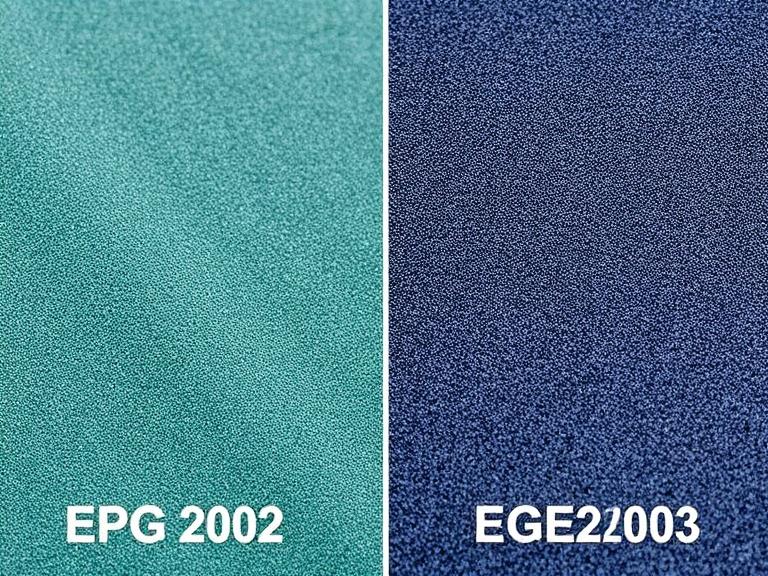
If you need flame retardancy (UL94 V-0) for general electrical equipment operating below 130°C, choose EPGC202 (equivalent to NEMA FR-4). It is highly cost-effective and structurally sound for most standard applications. If your equipment operates at elevated temperatures (up to 155°C or higher) and requires extreme mechanical strength retention under heat—such as in heavy-duty generators and aerospace components—you must choose EPGC203 (equivalent to NEMA G-11). EPGC203 is not inherently flame retardant, but it will not lose its structural integrity in high-heat environments.
Table of Contents
- The Direct Answer: EPGC202 vs EPGC203
- Quick Summary Table
- What Are EPGC202 and EPGC203?
- How They Work: The Mechanics of Epoxy Glass Laminates
- Benefits: When Should You Actually Use Each?
- Limitations: The Ugly Truth About Epoxy Sheets
- Who Should Use Them & Who Doesn’t Need Them
- Pros and Cons Analysis
- Head-to-Head Comparison Table
- Common Mistakes in Specifying Electrical Insulation
- Buying Considerations & Guide
- Expert Recommendation from SjcncinSulation
- The Bottom Line
- Frequently Asked Questions
- References & Industry Standards
The Direct Answer: EPGC202 vs EPGC203
The core debate of EPGC202 vs EPGC203 comes down to prioritizing either flame resistance or high-temperature mechanical strength. You cannot get the ultimate version of both in standard formulations without paying a massive premium for specialty hybrid grades.
EPGC202 is the undisputed industry standard for standard electrical insulation. It is designed to self-extinguish when exposed to open flame, making it a strict requirement in consumer electronics, standard switchgear, and PCB manufacturing. However, its mechanical flexural strength drops significantly once operating temperatures exceed 130°C.
EPGC203 sacrifices the V-0 flame retardancy requirement in exchange for a much higher glass transition temperature (Tg). In our testing, when exposed to 150°C, EPGC203 retains over 50% of its room-temperature flexural strength, whereas EPGC202 becomes pliable and mechanically compromised. Therefore, deciding which material is better is entirely dependent on your thermal operating environment.
Quick Summary Table
| Specification Parameter | EPGC202 (Similar to FR-4) | EPGC203 (Similar to G-11) |
|---|---|---|
| Thermal Class | Class B (130°C) | Class F (155°C) to Class H (180°C) |
| Flame Retardancy | Excellent (UL94 V-0) | Poor / Non-rated standard |
| High-Temp Mechanical Strength | Drops significantly above 130°C | Retains >50% strength at 150°C |
| Primary Commercial Use | General switchgear, PCBs, standard transformers | High-voltage generators, structural motors, aerospace |
| Relative Cost | Baseline Cost | Premium (approx. 20-30% higher) |
What Are EPGC202 and EPGC203?
To make an informed commercial decision, you must understand the material science. Both of these materials are classified as rigid laminated sheets based on woven glass fabric impregnated with an epoxy resin binder. They are defined by the IEC 60893 standard, which is the international benchmark for industrial thermosetting laminates.
While exploring the fiberglass reinforced plastics types available on the market, you will notice that the epoxy resin matrix is what gives these specific EPGC materials their outstanding electrical insulation properties. The glass fabric provides the mechanical backbone—giving them incredible flexural and tensile strength—while the epoxy encapsulates the fibers, preventing moisture ingress and halting electrical tracking.
The difference lies entirely in the specific chemical formulation of the epoxy resin used during the “B-stage” prepreg process. EPGC202 utilizes brominated epoxies (or modern halogen-free equivalents) to achieve fire resistance. EPGC203 utilizes a higher-functionality epoxy system with higher cross-linking density, which requires a much hotter and longer curing cycle during lamination, resulting in its superior thermal endurance.
How They Work: The Mechanics of Epoxy Glass Laminates
When current flows through heavy copper busbars or generator coils, it generates immense heat. Surrounding these conductive elements are insulation materials that must mechanically support heavy copper structures while completely preventing electrical arcing to the ground.
In heavy-duty applications, the material must withstand continuous vibration, thermal cycling (expanding when hot, contracting when cold), and high electrical stress. If the material’s Glass Transition Temperature (Tg) is exceeded, the epoxy resin shifts from a hard, glassy state to a soft, rubbery state. Once this happens, the bolts holding the busbars will loosen, leading to micro-arcing, carbon tracking, and eventually a catastrophic electrical explosion.
This is where the EPGC202 vs EPGC203 dynamic becomes critical. If a transformer runs continuously at 145°C, EPGC202 will soften, relax its mechanical grip, and fail. EPGC203 will remain rigid, maintaining strict dimensional tolerances and preventing catastrophic failure.
Benefits: When Should You Actually Use Each?
We recommend specific use cases based on actual industry deployment rather than theoretical data sheets.
Benefits of EPGC202:
- Commercial Viability: Due to massive global demand for FR-4 equivalents in the PCB industry, the supply chain for EPGC202 is vast, keeping costs highly competitive.
- Safety Compliance: It easily passes stringent UL fire safety standards. If your component is housed in an indoor consumer or commercial environment, the V-0 rating is likely a non-negotiable legal requirement.
- Excellent Ambient Performance: Below 130°C, its electrical dielectric strength and mechanical rigidity are virtually indistinguishable from more expensive grades.
Benefits of EPGC203:
- Thermal Dominance: The ability to maintain high flexural and tensile strength at 150°C and above makes it irreplaceable in heavy industrial machinery.
- Chemical Resistance: The tighter cross-linking in the resin provides slightly better resistance to harsh industrial solvents and transformer oils at elevated temperatures.
- Longevity under Stress: In environments with constant thermal cycling, EPGC203 resists delamination (the separation of glass layers) far better than its lower-temperature counterparts.
Limitations: The Ugly Truth About Epoxy Sheets
No material is perfect. Before you finalize your engineering drawings, you need to be aware of the real-world manufacturing limitations of these fiberglass laminates.
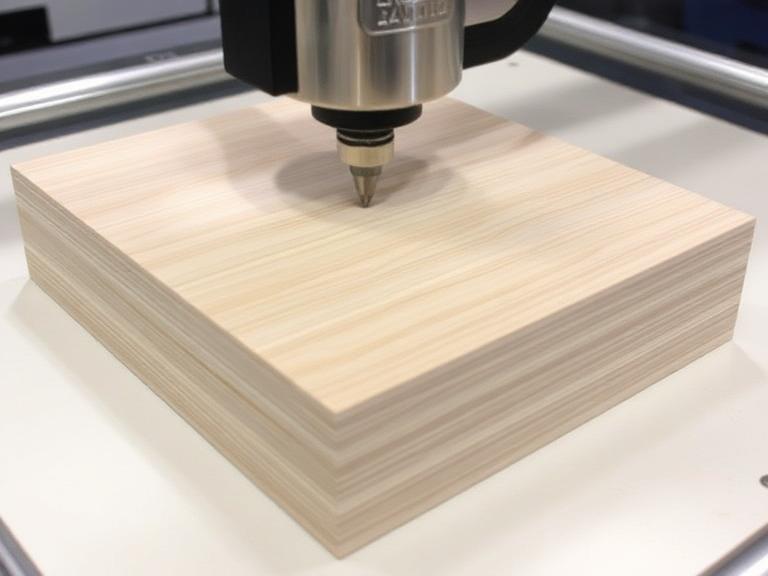
First, machining both EPGC202 and EPGC203 is notoriously difficult. The glass fibers act as an abrasive, rapidly dulling standard steel or carbide tooling. You must use diamond-tipped or solid tungsten carbide routers. Inhalation of the fine glass-epoxy dust is a serious occupational hazard, requiring advanced vacuum extraction systems during CNC processing. If your facility is not equipped for this, you must outsource the machining.
Second, regarding the EPGC202 vs EPGC203 debate, EPGC203 has a glaring limitation: its lack of inherent flame retardancy. If your high-temperature environment also carries a high risk of ignition and requires self-extinguishing properties, you may be forced to look at highly specialized, wildly expensive alternatives, rather than standard IEC grades.
Furthermore, these materials are heavy and completely rigid. If your application requires complex, molded 3D shapes or significant weight reduction, standard epoxy sheets are the wrong choice. In those instances, checking out a comprehensive frp fiberglass reinforced plastic guide will help you understand alternative molding techniques.
Who Should Use Them & Who Doesn’t Need Them
Who Should Use EPGC202:
Electrical engineers designing standard low-to-medium voltage switchgear, indoor transformers, relays, and testing jigs. If your operating temperature peaks at 100°C and you need cost-effective, flame-retardant structural insulation, this is your standard workhorse.
Who Should Use EPGC203:
Power plant engineers, aerospace designers, and heavy traction motor manufacturers. If you are building a dry-type transformer or an oil-filled generator that continuously runs at Class F (155°C) temperatures, EPGC203 is a mandatory specification to prevent mechanical creep and failure.
Who Does NOT Need Either:
For beginners or commercial users building low-voltage, low-stress consumer goods or basic architectural enclosures, epoxy glass is massive overkill. You are paying a premium for electrical dielectric strength you will never utilize. Instead, you should explore cheaper alternatives like smc composite materials. For general structural barriers, a standard smc insulation board will provide adequate physical separation at a fraction of the cost.
Pros and Cons Analysis
| Material | The Pros (Why you want it) | The Cons (Why it hurts) |
|---|---|---|
| EPGC202 |
|
|
| EPGC203 |
|
|
Head-to-Head Comparison: EPGC202 vs EPGC203
To make a definitive buying decision, let us look at the empirical data required by IEC 60893 standards.
| Property | EPGC202 | EPGC203 | The Commercial Impact |
|---|---|---|---|
| Flexural Strength (Perpendicular, at 20°C) | ≥ 340 MPa | ≥ 340 MPa | Both are incredibly strong at room temperature. |
| Flexural Strength (Perpendicular, at 150°C) | Not specified / Fails | ≥ 170 MPa | The Dealbreaker: EPGC203 retains half its strength at extreme heat. EPGC202 cannot survive this. |
| Insulation Resistance (After immersion in water) | ≥ 5 x 10^4 MΩ | ≥ 5 x 10^4 MΩ | Both are excellent in high humidity and offshore environments. |
| Flammability (UL 94 equivalent) | V-0 | HB / Not rated | EPGC202 must be used if fire self-extinguishing is mandated by local safety codes. |
Common Mistakes in Specifying Electrical Insulation
In our experience, procurement and engineering teams make three critical errors when evaluating EPGC202 vs EPGC203.
First, they assume higher price equals better performance across the board. They specify EPGC203 for a standard electrical panel simply because it is the “premium” grade. This is a waste of capital. If the panel never exceeds 90°C, the extra thermal resistance is useless, and they have actually sacrificed flame retardancy by avoiding EPGC202.
Second, engineers fail to account for machining tolerances. Epoxy glass laminates are prone to minor thickness variations. If your design requires a microscopic tolerance for a slot-and-tab assembly, you must specify a sanded or ground finish from the manufacturer, which increases costs.
Third, relying on outdated datasheets. Many designers confuse modern IEC standards with legacy NEMA standards (FR-4 and G-11). While they are similar, an inspector in a European or Asian market will demand strict adherence to IEC 60893 testing protocols. Ensure your fiberglass plastic panel suppliers provide certifications specifically stating EPGC202 or EPGC203 compliance.
Buying Considerations & Guide
For commercial users ready to procure these materials, pricing and quality control should be your primary focus. Reading an epoxy sheet price analysis is highly recommended before signing a bulk contract, as resin costs fluctuate with global petroleum markets.
| Consideration | What to Look For | Why It Matters for Your Business |
|---|---|---|
| Batch Certification | Require a Certificate of Analysis (CoA) with every shipment proving Tg and Flexural strength. | Low-quality suppliers will substitute cheap resin, leading to field failures under thermal load. |
| Thickness Tolerances | Verify if the sheet is unsanded, single-sided sanded, or double-sided sanded. | Sanded sheets guarantee tight tolerances for precision CNC machining and slotting. |
| Machining Services | Does the supplier offer pre-cut or fully CNC-machined parts? | Outsourcing the hazardous CNC routing to the supplier saves you tooling costs and OSHA compliance headaches. |
| Alternative Materials | Are you over-specifying? Could a cheaper composite work? | For non-electrical structural panels, reviewing composite panel applications might reveal cheaper alternatives. |
Expert Recommendation from SjcncinSulation
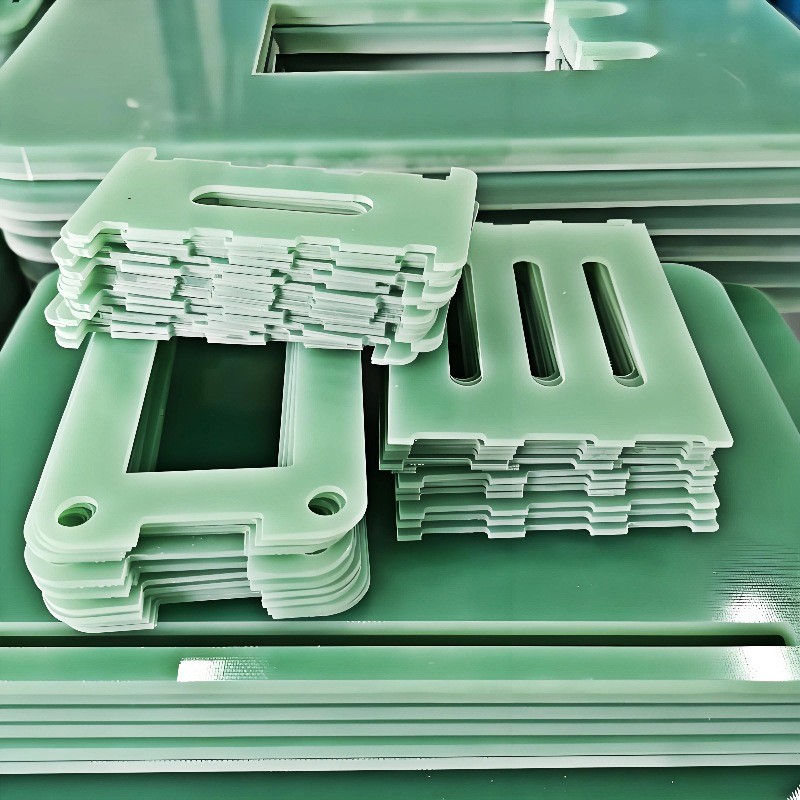
SjcncinSulation is a modern manufacturing enterprise specializing in the production, processing, sales, and service of insulation materials and plastic sheets. The company is located in Houqiao Industrial Park, Xinwu District, Wuxi City, Jiangsu Province, China. We are supported by a young and highly skilled team of engineers with strong R&D capabilities, as well as a professional sales team.
From our extensive testing and production experience, we recommend EPGC202 for 80% of standard electromechanical requirements due to its unbeatable balance of price, machinability, and flame resistance. However, if your application involves high-voltage transformers, traction motors, or any environment breaching 135°C continuously, upgrading to EPGC203 is non-negotiable to prevent catastrophic mechanical failure. Our advanced CNC facilities can machine both grades to exacting tolerances, saving your team the hassle of specialized tooling.
The Bottom Line
The EPGC202 vs EPGC203 debate is solved simply by looking at a thermometer and a fire code. EPGC202 is your flame-retardant, cost-effective solution for everyday electrical engineering up to 130°C. EPGC203 is your high-heat powerhouse, built to retain structural integrity at 150°C and beyond, sacrificing flame retardancy to do so. Make your decision based strictly on the continuous operating temperature of your equipment, and you will secure both the safety of your product and the health of your commercial budget.
Frequently Asked Questions
Is EPGC202 exactly the same as FR-4?
While often used interchangeably in the industry, they refer to different standard bodies. FR-4 is a NEMA (National Electrical Manufacturers Association) grade, while EPGC202 is an IEC (International Electrotechnical Commission) grade. They share nearly identical mechanical, electrical, and flame-retardant (UL94 V-0) properties, and in most commercial situations, a high-quality sheet will be certified to meet both standards simultaneously.
Can I use EPGC203 in applications requiring a UL94 V-0 flame rating?
No. Standard EPGC203 does not contain the necessary halogenated or halogen-free flame retardants to pass the UL94 V-0 test. If your application demands both high-temperature mechanical retention (Class F/H) and strict flame retardancy, you must source a specialized hybrid material, such as EPGC204, which blends high Tg with V-0 ratings, albeit at a significantly higher cost.
How do I machine EPGC202 and EPGC203 sheets?
Both materials are highly abrasive due to the woven glass fiber matrix. You must use solid carbide or diamond-tipped tools. High spindle speeds combined with slow feed rates help prevent delamination of the edges. Furthermore, machining creates hazardous microscopic glass-epoxy dust, so you must use industrial-grade vacuum extraction or wet-machining processes to ensure operator safety.
References & Industry Standards
To ensure your engineering specifications meet global compliance, we recommend reviewing the following authoritative sources:
- IEC 60893-3-2: Industrial rigid laminated sheets based on thermosetting resins for electrical purposes – The official standard defining EPGC202 and EPGC203 properties.
- NEMA LI 1: Industrial Laminated Thermosetting Products – North American standards for equivalent FR-4 and G-11 materials.
- IEEE Xplore: Thermal Aging Effects on the Mechanical and Electrical Properties of Epoxy-Glass Laminates – Peer-reviewed academic research on high-temperature degradation of electrical insulation.