SjcncinSulation. is a modern manufacturing enterprise specializing in the production, processing, sales, and service of insulation materials and plastic sheets. The company is located in Houqiao Industrial Park, Xinwu District, Wuxi City, Jiangsu Province, China. We are supported by a young and highly skilled team of engineers with strong R&D capabilities, as well as a professional sales team. From our experience engineering advanced structural materials, we understand that the future of agricultural infrastructure relies heavily on optimized light transmission and structural resilience. In 2026, the transition toward high-performance composites is undeniable, making the selection of the right fiberglass panels for greenhouse operations a critical factor for agricultural success.
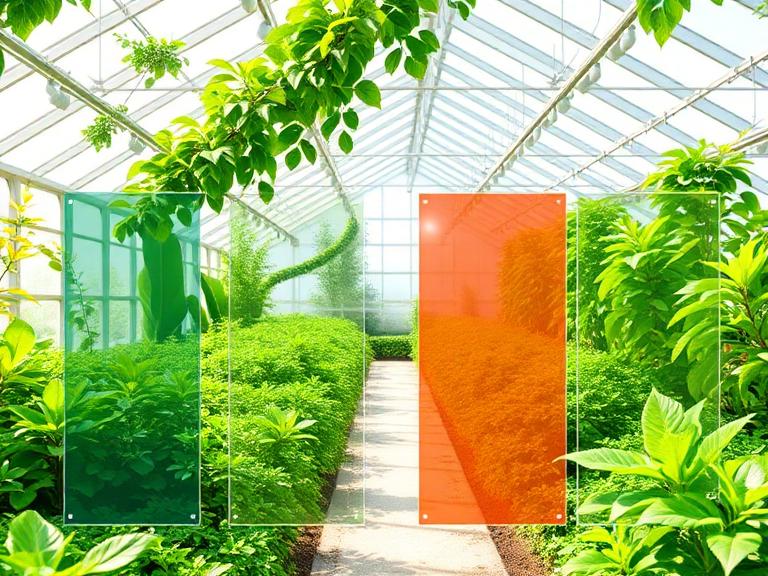
When engineering a controlled agricultural environment, standard glass and twin-wall polycarbonate often fall short in demanding climates. Glass lacks the necessary light diffusion, leading to canopy burn, while standard polycarbonate can suffer from rapid UV degradation. Conversely, premium fiberglass panels for greenhouse structures provide unparalleled light scattering (diffused light), extreme hail resistance, and exceptional longevity when properly coated. In this comprehensive guide, we will leverage our deep metallurgical and polymer expertise to evaluate the top 8 types and configurations of fiberglass panels for greenhouse construction available in 2026.
Table of Contents
- Summary Table: Top 8 Fiberglass Panels for Greenhouse
- 1. Heavy-Duty Corrugated Fiberglass Panels for Greenhouse
- 2. UV-Stabilized Flat Fiberglass Panels for Greenhouse
- 3. High-Diffusion Gel-Coated Fiberglass Panels for Greenhouse
- 4. FRP Honeycomb Composite Panels
- 5. Woven Roving Reinforced Fiberglass Panels for Greenhouse
- 6. Fire-Retardant Fiberglass Panels for Greenhouse
- 7. Anti-Condensation Treated Fiberglass Panels for Greenhouse
- 8. High-Clarity Epoxy Fiberglass Panels for Greenhouse
- Expert Buying Guide: Maximizing Your Investment
- Frequently Asked Questions (FAQs)
- Industry and Academic References
Summary Table: Top 8 Fiberglass Panels for Greenhouse
To assist facility managers and agricultural engineers in their procurement process, we have compiled a technical summary matrix of the leading configurations of fiberglass panels for greenhouse applications in 2026. We recommend using this table to cross-reference your specific climate requirements with the optimal polymer matrix.
| Panel Configuration | Light Transmission | Primary Benefit | Ideal Application |
|---|---|---|---|
| Heavy-Duty Corrugated FRP | 80% – 85% | Extreme structural rigidity | High snow/wind load regions |
| UV-Stabilized Flat FRP | 85% – 88% | Aesthetic appeal, easy cleaning | Commercial retail nurseries |
| Gel-Coated High-Diffusion FRP | 82% – 87% | Maximum PAR light scattering | Dense canopy crops (e.g., tomatoes) |
| FRP Honeycomb Composites | 60% – 70% | Superior thermal insulation (R-Value) | Extreme cold winter climates |
| Woven Roving Reinforced FRP | 75% – 80% | Maximum impact resistance | Regions prone to heavy hail |
| Fire-Retardant FRP | 75% – 82% | Building code compliance | Urban/Rooftop commercial farming |
| Anti-Condensation FRP | 85% – 90% | Prevents fungal diseases | High-humidity tropical environments |
| High-Clarity Epoxy FRP | 88% – 92% | Maximum direct light penetration | Low-light northern latitudes |
1. Heavy-Duty Corrugated Fiberglass Panels for Greenhouse
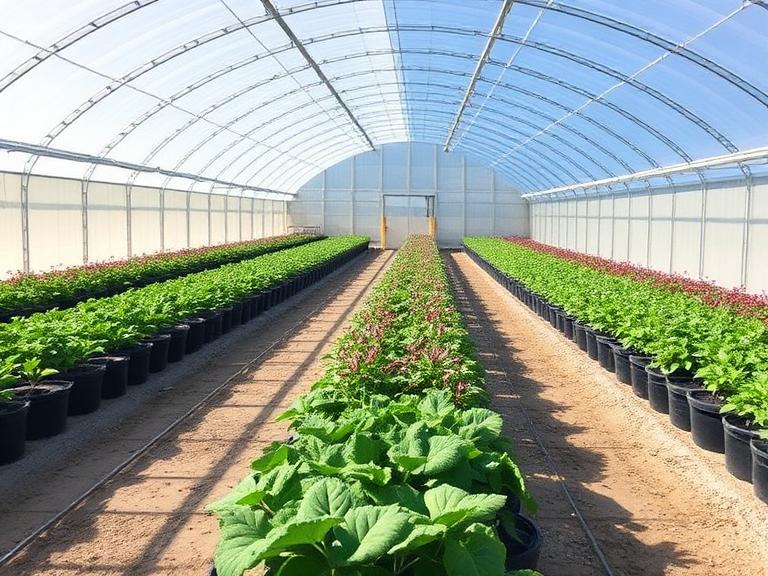
The standard by which all other agricultural cladding is measured, corrugated fiberglass panels for greenhouse construction remain a staple in 2026. From our experience, the sine-wave profile of corrugated sheets exponentially increases the structural rigidity of the panel, allowing it to span greater distances between purlins without sagging. This reduces the amount of framing shadow cast on the plants below.
When assessing overall project budgets, understanding the standard dimensions is vital. We encourage project managers to review our fiberglass sheets 4×8 price analysis to forecast structural costs accurately. Corrugated fiberglass panels for greenhouse use naturally diffuse sunlight, ensuring that deep canopy foliage receives adequate Photosynthetically Active Radiation (PAR) without the risk of scorching.
2. UV-Stabilized Flat Fiberglass Panels for Greenhouse
While corrugated panels offer structural strength, flat fiberglass panels for greenhouse applications provide a sleek, modern aesthetic combined with seamless integration into aluminum extrusion systems. The primary advancement in 2026 for flat panels is the integration of highly cross-linked UV stabilizers directly into the polymer matrix, rather than just as a surface coating.
We recommend flat panels for side walls and end walls where cleaning efficiency is paramount. Flat surfaces prevent the accumulation of dust and biological debris, which can otherwise severely reduce light transmission over a decade of use. For a deeper understanding of budgeting for these modern flat systems, consult our fiberglass sheets cost guide.
3. High-Diffusion Gel-Coated Fiberglass Panels for Greenhouse
One of the historical drawbacks of early generation FRP was fiber blooming—the phenomenon where the resin degrades, exposing the underlying glass fibers to the elements. In 2026, the implementation of 20-mil isophthalic gel coats has completely eradicated this issue. High-diffusion gel-coated fiberglass panels for greenhouse structures represent the pinnacle of longevity.
Our R&D team notes that these gel coats not only protect the structural integrity of the sheet but are mathematically formulated to scatter incoming photons. This scattered light wraps around structural supports and plant leaves, ensuring 360-degree illumination of the crop, significantly boosting overall yield.
4. FRP Honeycomb Composite Panels
For operations located in extreme northern climates, standard single-skin fiberglass panels for greenhouse use may not provide adequate thermal insulation, leading to astronomical winter heating costs. FRP honeycomb panels solve this by sandwiching a cellular core between two thin, highly durable fiberglass skins.
This configuration traps dead air within the hexagonal cells, creating a massive barrier against thermal transfer while still allowing adequate diffused light to penetrate. While the initial capital expenditure is higher, the ROI via energy savings is substantial. We highly advise consulting our comprehensive guide on fiberglass honeycomb panels cost to properly model your operational heating expenses.
5. Woven Roving Reinforced Fiberglass Panels for Greenhouse
Standard chopped strand mat (CSM) fiberglass is excellent for general applications, but areas prone to severe hail or extreme wind sheer require enhanced mechanical strength. Woven roving fiberglass panels for greenhouse applications utilize a continuous, bidirectional weave of glass fibers, vastly increasing the impact resistance and tensile strength of the panel.
To understand the variations in composite reinforcement, we suggest reviewing the fiberglass reinforced plastics types. From our experience, woven roving panels will survive impacts that would easily shatter traditional glass or puncture twin-wall polycarbonate, securing your agricultural investment against catastrophic weather events.
6. Fire-Retardant Fiberglass Panels for Greenhouse
As urban farming and rooftop commercial greenhouses become increasingly prevalent in 2026, adherence to strict municipal fire codes is mandatory. Fire-retardant fiberglass panels for greenhouse use are formulated with specialized halogenated or alumina trihydrate fillers that extinguish flames and prevent the spread of surface fires.
Our expertise at SjcncinSulation extends deeply into flame-retardant industrial laminates. If your facility requires advanced structural components beyond just the glazing, we recommend exploring our insights on fr4 sheet manufacturers and reviewing the electrical insulation sheet materials necessary to ensure complete environmental and electrical safety within automated greenhouse environments.
7. Anti-Condensation Treated Fiberglass Panels for Greenhouse
In highly humid, closed-loop greenhouse environments, condensation naturally forms on the interior surface of the glazing. If this condensation forms into droplets, it drips onto the plants below, creating a vector for fungal diseases like Botrytis. Furthermore, water droplets act as microscopic lenses, reflecting incoming light away from the crop.
The top-tier anti-condensation fiberglass panels for greenhouse applications feature a factory-applied hydrophilic coating. This forces the moisture to form a continuous, flat sheet of water that easily drains down the interior slope of the roof into the gutter system, protecting your crop and maintaining maximum light transmission.
8. High-Clarity Epoxy Fiberglass Panels for Greenhouse
While polyester and vinyl ester resins are standard, epoxy-based fiberglass panels for greenhouse structures are utilized when absolute maximum clarity and structural rigidity are required. Epoxy resins offer superior bonding to the glass fibers, resulting in a panel that has a much higher light transmission percentage than standard FRP.
For large-scale commercial developers interested in the economics of epoxy matrix composites, we provide an in-depth epoxy sheet price analysis. Additionally, identifying reliable epoxy fiberglass sheet manufacturers is a critical step in securing the supply chain for massive, multi-acre agricultural developments.
Expert Buying Guide: Maximizing Your Investment
Selecting the optimal fiberglass panels for greenhouse operations goes beyond simply picking the lowest cost per square foot. The structural framework of your greenhouse must dictate your material choice. If you are utilizing a heavy steel framework, the weight of the panels is less of a concern. However, if you are retrofitting an older, lighter aluminum structure, you must carefully calculate the dead load of the new FRP panels.
Furthermore, internal structural supports, such as benching and automated tray systems, must be equally resilient. We frequently recommend integrating high-strength laminates for internal shelving. You can explore the g10 material properties to understand how extreme-duty fiberglass composites can be used inside the greenhouse, and consult with leading phenolic resin sheet suppliers for chemical-resistant structural boards that will not rot in high-humidity environments.
Frequently Asked Questions (FAQs)
From our experience, fiberglass panels for greenhouse applications are vastly superior because they naturally diffuse sunlight. Glass allows direct, intense light that creates deep shadows and can burn upper foliage. Diffused light penetrates deeper into the plant canopy, promoting even growth. Additionally, fiberglass is exponentially more resistant to hail and impact damage than glass.
When manufactured with high-quality UV stabilizers and a minimum 20-mil protective gel coat, top-tier fiberglass panels for greenhouse use can easily exceed a functional lifespan of 15 to 20 years before any significant decline in light transmission occurs.
Historically, early generation FRP panels were prone to yellowing due to UV degradation of the polyester resin. However, the advanced fiberglass panels for greenhouse construction available in 2026 utilize highly engineered UV inhibitors and fluoropolymer films that block the specific UV wavelengths responsible for resin degradation, virtually eliminating the yellowing effect.
Yes. Fiberglass panels can be cut on-site using standard power tools equipped with fine-tooth carbide blades or specialized abrasive masonry blades. However, we strictly recommend wearing appropriate PPE, including respirators, safety goggles, and heavy gloves, to protect against fine glass dust generated during the cutting process.
Industry and Academic References
To ensure the highest standard of technical accuracy and agricultural science, the engineering and botanical principles utilized in our evaluation of fiberglass panels for greenhouse applications are aligned with the following authoritative bodies:
- United States Department of Agriculture (USDA) – Agricultural Research Service: Greenhouse Glazing and Light Transmission Studies
- Penn State Extension – Greenhouse Glazing Materials and Crop Yield Metrics
- U.S. Department of Energy (DOE) – Building Envelope Thermal Performance and Composite Insulation Standards