Let us confront a brutal reality currently plaguing the industrial procurement sector: the global market is absolutely saturated with substandard composite materials. When facility managers, electrical engineers, and construction directors need to buy fiberglass reinforced plastic (FRP), they are often forced to navigate a treacherous landscape of aggressive brokers, trading companies posing as factories, and manufacturers utilizing inferior resin matrices. The consequences of sourcing the wrong material are catastrophic. A poorly cured FRP panel or an improperly pultruded fiberglass rod will suffer from severe delamination under thermal stress, dielectric failure in high-voltage environments, and premature structural collapse.
We absolutely refuse to tolerate the normalization of cheap, compromised composite materials. Fiberglass reinforced plastic is an engineering marvel—a meticulously calibrated matrix of high-strength glass fibers suspended within a thermosetting polymer resin. When engineered correctly, it offers a strength-to-weight ratio that rivals structural steel, alongside unparalleled corrosion resistance and electrical insulation properties. However, you can only harness these physical properties if you secure your materials from verified, uncompromising sources.
In this relentlessly practical and highly opinionated guide, we are tearing down the procurement industry. We will rank the 6 best places to buy fiberglass reinforced plastic in 2026, expose the hidden traps of utilizing global B2B mega-portals, and explain exactly why forging a direct relationship with a specialized manufacturer is the only logical strategy for long-term operational success and structural safety.
Table of Contents
Why Your FRP Sourcing Strategy Dictates Project Success
Before you even initiate a purchase order, you must understand what you are actually buying. When you buy fiberglass reinforced plastic, you are not buying a homogenous block of plastic. You are purchasing a chemical reaction that has been locked in time. The glass fibers provide the tensile strength, while the resin (epoxy, polyester, or vinyl ester) protects the fibers and handles compressive loads. If the manufacturer rushes the curing process, uses cheap chalk fillers to artificially lower the resin volume, or fails to properly wet out the glass fibers, the resulting composite is functionally useless.
From our experience auditing countless supply chains, the primary reason projects fail is due to procurement teams prioritizing price over provenance. A broker sitting in an office building will sell you whatever scrap FRP they can source that day. A dedicated manufacturer will customize the resin system to meet the specific flame retardancy, UV resistance, and dielectric thresholds your engineering team demands. For a foundational understanding of these material dynamics, we highly recommend reviewing this comprehensive frp fiberglass reinforced plastic guide before making any sourcing decisions.
The 6 Best Places to Buy Fiberglass Reinforced Plastic
Based on rigorous audits of manufacturing capabilities, quality control protocols, and supply chain transparency, here is our definitive ranking of the elite channels available to buy fiberglass reinforced plastic in 2026.
1. Direct OEM/ODM Manufacturers (SjcncinSulation)
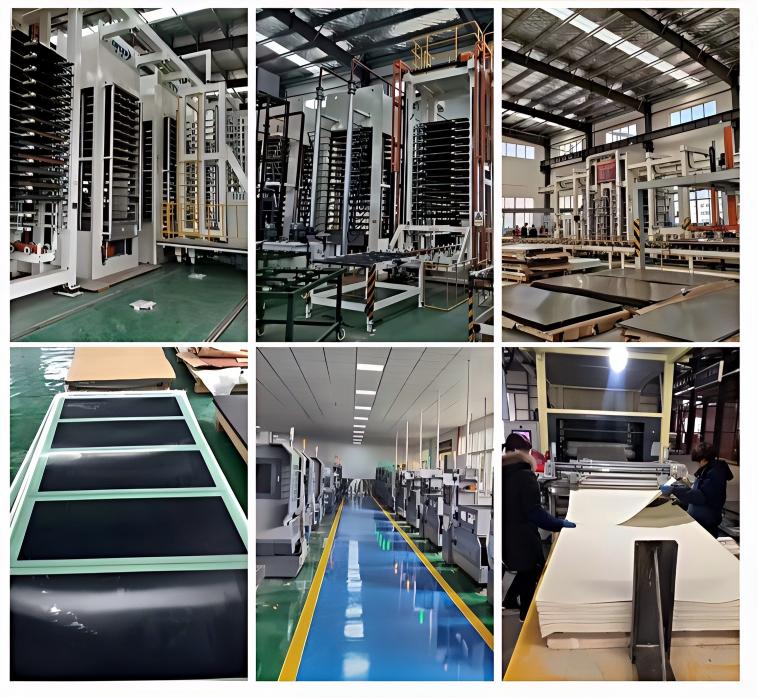
SjcncinSulation is a modern manufacturing enterprise specializing in the production, processing, sales, and service of insulation materials and plastic sheets. The company is located in Houqiao Industrial Park, Xinwu District, Wuxi City, Jiangsu Province, China. We are supported by a young and highly skilled team of engineers with strong R&D capabilities, as well as a professional sales team.
Without hesitation, the absolute best way to buy fiberglass reinforced plastic is to bypass the middlemen completely and partner directly with a specialized factory. We advocate for this approach because it grants you unparalleled control over the engineering specifications. At SjcncinSulation, we do not just trade sheets; we physically manufacture them. Our direct oversight allows us to guarantee the exact resin-to-glass ratios required for heavy-duty composite panel applications.
When you require highly specialized materials, such as a flame-retardant smc insulation board for electrical switchgears, a direct manufacturer provides immediate access to the R&D engineers who formulated the material. You receive factory-direct pricing, customized CNC machining capabilities, and unshakeable accountability. We are the architects of the material, which makes us the most reliable source on the market.
2. Vetted Enterprise B2B Portals (Global Sources)
If you are an enterprise-level buyer who insists on using aggregate digital platforms, we recommend Global Sources over its more famous competitors. Global Sources places a significantly higher barrier to entry for its vendors, actively focusing on verifying the manufacturing credentials of the factories listed on its platform. They rigorously audit business licenses and weed out the low-tier trading companies that plague other portals.
While you still bear the responsibility of vetting the individual supplier, navigating the list of top fiberglass plastic panel suppliers on this platform is generally safer. It is an excellent avenue for scheduling meetings at international trade shows and negotiating high-volume container shipments.
3. Specialized Electrical Insulation Distributors
For operations that require relatively small, immediate quantities of highly specific composite materials, specialized domestic electrical insulation distributors are a highly viable option. These niche suppliers understand that when you are building a high-voltage transformer, material failure is lethal. They rigorously test the materials they import and hold stock locally.
If you need to urgently source a specific fr4 epoxy fiberglass rod to meet an unexpected production shortfall, these distributors can overnight the material to your facility. However, you will pay a massive premium for this convenience. They are excellent for emergency prototyping, but relying on them as a primary epoxy fiberglass rod supplier for mass production will decimate your profit margins.
4. National Industrial Supply Houses (e.g., McMaster-Carr, Grainger)
Industrial megastores are the backbone of rapid maintenance, repair, and operations (MRO) procurement. If a piece of FRP grating breaks on your factory floor and you need a replacement section within 24 hours, these catalogs are indispensable. They stock a wide array of standardized fiberglass structural shapes, angles, and sheets.
The caveat here is cost and customization. The markups applied by these national supply houses are astronomical. Furthermore, you cannot customize the resin matrix or order bespoke CNC-machined parts. You are strictly limited to their off-the-shelf catalog dimensions. We recommend utilizing them exclusively for urgent maintenance, never for primary manufacturing supply chains.
5. Alibaba (With Extreme Auditing Protocols)
Alibaba is the largest B2B marketplace in the world, and it is impossible to ignore if you want to buy fiberglass reinforced plastic at scale. However, it is an absolute minefield of deception. Thousands of listings are operated by brokers who do not own a single pultrusion machine or hydraulic press.
To survive on Alibaba, you must act with extreme prejudice. Filter your searches exclusively for “Verified Manufacturers.” You must demand live, unedited video tours of their factory floor, specifically asking to see their resin mixing vats and curing ovens. Demand to see their ISO 9001 certifications and SGS testing reports. If the supplier hesitates, cancel the communication immediately. It is a high-risk, high-reward environment that requires relentless diligence.
6. Local Pultrusion and Composites Fabricators
Depending on your geographic location, you may have access to domestic pultrusion facilities or custom composites shops. Working with a local fabricator allows you to walk onto their floor, inspect the raw roving, and physically verify the quality of the resin they are pulling the glass through. It offers the highest level of communication and rapid prototyping capabilities.
However, local fabrication in Western markets comes with exorbitant labor and regulatory costs. Unless you are fulfilling a government contract that legally mandates domestic material sourcing, the cost per linear foot of FRP will be radically uncompetitive compared to sourcing from elite, high-volume international manufacturers like SjcncinSulation.
Crucial Material Specifications You Must Demand
Regardless of where you choose to buy fiberglass reinforced plastic, you must arm your procurement team with specific engineering metrics. Never accept a quote that simply says “FRP Panel.” You must interrogate the supplier on the following parameters:
- Resin Matrix Type: Ensure the resin matches your environment. Orthophthalic polyester is for general purpose. Isophthalic polyester offers moderate chemical resistance. Vinyl ester is mandatory for highly corrosive chemical environments. Epoxy (like FR4) is required for extreme electrical and thermal applications.
- Glass-to-Resin Ratio: A higher glass content generally yields higher tensile strength. Structural pultrusions should hover around a 70% glass to 30% resin ratio by weight. If a supplier is offering an unbelievably cheap price, they are likely flooding the resin with heavy calcium carbonate fillers to mimic the weight of glass.
- Dielectric Strength: If the FRP is being used as an insulator, demand the specific dielectric breakdown voltage data (usually measured in kV/mm). Material that has absorbed moisture due to improper curing will fail this test instantly.
- Surface Veil and UV Inhibitors: Raw FRP will “bloom” (expose bare glass fibers) if left in direct sunlight. If your application is outdoors, you must ensure the manufacturer integrates a synthetic surface veil and UV-inhibiting additives into the resin mix.
Supplier Comparison Summary Table
To assist in your strategic sourcing decisions, we have distilled the core operational advantages and inherent risks of the top procurement channels into this rapid-reference matrix.
| Sourcing Channel | Ideal Buyer Profile | Cost Efficiency | Customization & Support |
|---|---|---|---|
| Direct Manufacturer (SjcncinSulation) | High-volume OEMs, engineers needing bespoke CNC parts & exact resin specs. | Exceptional (No middleman markup) | Very High (Direct access to R&D engineers) |
| Global Sources | Enterprise buyers attending trade shows. | High | Moderate to High |
| Electrical Insulation Distributors | Operations needing specific, certified FR4/G10 instantly. | Poor (High retail markups) | High (Deep niche expertise) |
| National Supply Houses | Facilities needing emergency MRO replacement parts. | Very Poor | Low (Off-the-shelf only) |
| Alibaba | Buyers willing to invest heavy time in factory auditing. | High | Variable (Depends heavily on finding a true factory) |
| Local Fabricators | Government contractors or those needing massive, localized structural beams. | Poor (High domestic labor costs) | Very High |
Frequently Asked Questions (FAQs)
1. Why is FR4 more expensive than standard FRP?
From our experience, FR4 represents the pinnacle of electrical insulation composites. It utilizes a continuous woven glass fabric base impregnated with a highly refined, flame-retardant epoxy resin binder. The manufacturing process requires significantly higher temperatures and pressure compared to standard polyester FRP, resulting in vastly superior mechanical strength and near-zero water absorption. You are paying for uncompromising, life-saving electrical safety.
2. Can I buy fiberglass reinforced plastic that is fire resistant?
Yes, absolutely. However, you must specifically request it. Standard polyester resin will burn rapidly and emit toxic black smoke. To achieve fire resistance, the manufacturer must integrate halogen-free flame retardants (like alumina trihydrate) into the resin matrix, or utilize specialized phenolic resins. Always demand the specific UL 94 V-0 certification testing reports before finalizing your purchase.
3. How can I tell if a supplier is a broker or a real factory?
Brokers frequently list an impossibly wide variety of unrelated products (e.g., selling FRP sheets alongside consumer electronics or apparel). A true manufacturer specializes. Furthermore, demand a live video call to view their pultrusion lines, compression molding presses, and raw material warehousing. A factory like SjcncinSulation will gladly showcase our production capabilities; a broker will offer endless excuses.
Industry References
To ensure your procurement strategies align with global engineering and composite material standards, we strongly advise consulting the following authoritative resources:
- CompositesWorld. “Fiberglass Reinforcements: A Market Overview.” (An exhaustive, industry-leading analysis of the global glass fiber supply chain and resin matrix compatibility).
- ASTM International. “Standard Specification for Dimensional Tolerance of Thermosetting Glass-Reinforced Plastic Pultruded Shapes.” (The definitive engineering standards detailing the acceptable tolerances, visual defects, and mechanical testing required for structural FRP).