Electrostatic discharge (ESD) is the silent, invisible killer of modern electronics. A static shock so minor that a human operator cannot even feel it can instantaneously vaporize the microscopic silicon pathways inside a microprocessor. For electronics manufacturing facilities, uncontrolled static electricity does not just cause minor inconveniences; it destroys yield rates, inflates scrap budgets, and leads to catastrophic field failures that decimate brand reputation.
To combat this, the industry relies heavily on highly specialized electrical insulation sheet materials. Among the most commercially viable and structurally reliable options is ESD Bakelite. From our experience auditing and supplying top-tier PCB assembly lines, failing to integrate the proper static-dissipative substrates into your production environment is operational negligence. In this comprehensive guide, we strip away the marketing fluff to examine the precise Applications of antistatic bakelite sheets, evaluating where they excel, where they fail, and whether they are actually worth integrating into your specific manufacturing workflow.
Quick Answer: What Are the Primary Applications?
The core Applications of antistatic bakelite sheets revolve around protecting sensitive integrated circuits during aggressive manufacturing stages. The five primary uses are:
- PCB Drilling and Routing Backup Boards: Dissipating static generated by high-speed CNC friction.
- ICT and FCT Test Fixtures: Providing a non-conductive, yet static-safe base for electrical bed-of-nails testing.
- SMT Assembly Pallets: Transporting bare boards through pick-and-place and low-temp soldering operations.
- Workstation Surfaces: Creating static-safe, rigid assembly tables and custom staging jigs.
- Cleanroom Machinery Components: Machined gears, guides, and structural panels that prevent triboelectric charge buildup in automated equipment.
Table of Contents
- What It Is: The Engineering Behind ESD Bakelite
- How It Works: The Physics of Static Dissipation
- The 5 Crucial Applications of Antistatic Bakelite Sheets
- Commercial Benefits of Upgrading
- Limitations: When to Look Elsewhere
- Who Should Use It & Who Does Not Need It
- Common Procurement Mistakes
- Crucial Buying Considerations
- Expert Sourcing Recommendation
- Data and Comparison Tables
- Frequently Asked Questions
What It Is: The Engineering Behind ESD Bakelite
Standard Bakelite—historically known as phenolic paper laminate—is manufactured by applying extreme heat and pressure to layers of paper or canvas impregnated with a synthetic phenolic resin. It is an excellent, rigid electrical insulator. However, pure insulators are extremely dangerous in an electronics factory because they hold onto static charges indefinitely.
Antistatic Bakelite is a highly engineered upgrade. During the resin formulation process, carbon-based antistatic agents or proprietary conductive polymers are uniformly dispersed into the phenolic matrix. This transforms the material from a pure insulator into a static-dissipative material. In most professional situations, this means the material looks and machines exactly like standard bakelite, but its electrical properties have been fundamentally altered to protect sensitive circuitry.
How It Works: The Physics of Static Dissipation
To understand why this material is critical, you must understand the difference between conductive, dissipative, and insulative materials.
- Insulative (Greater than 1011 ohms): Holds static charge. Will discharge violently if a grounded object (like a microchip) touches it.
- Conductive (Less than 105 ohms): Moves electricity instantly. If a charged board touches a conductive surface, the rapid discharge (a spark) will blow the circuitry.
- Static Dissipative (106 to 109 ohms): The exact operating range of ESD Bakelite. It bleeds electrostatic charge to ground slowly, controllably, and safely.
By keeping the surface and volume resistivity strictly within the 106 to 109 ohm range, antistatic bakelite ensures that any triboelectric charge generated by sliding a PCB across a fixture is neutralized immediately without causing a destructive spark.
The 5 Crucial Applications of Antistatic Bakelite Sheets
In our testing and decades of supply chain observation, we have identified five primary areas where substituting standard plastics with ESD Bakelite yields massive financial returns through scrap reduction.
1. PCB Drilling and Routing Backup Boards
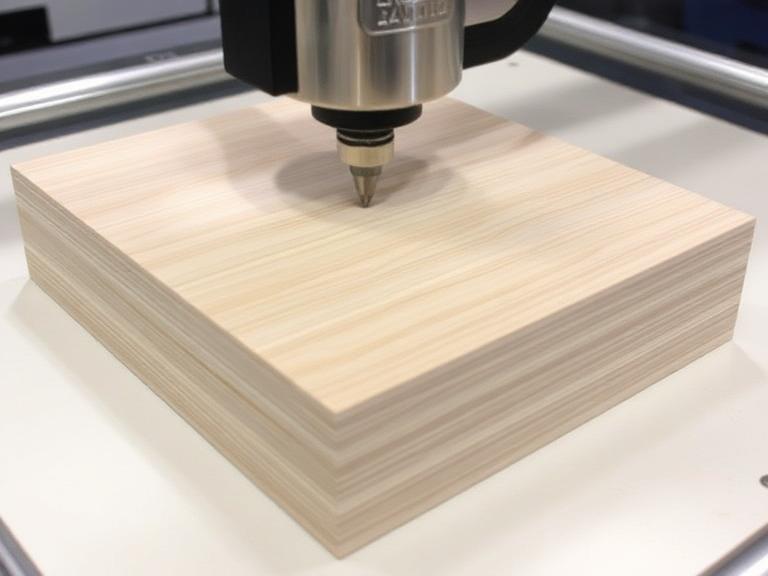
When high-speed CNC spindles drill through stacked layers of copper and fiberglass to create vias, the mechanical friction generates massive electrostatic charges. If standard phenolic or cheap MDF backup boards are used beneath the stack, this static charge accumulates on the drill bit and discharges directly into the internal layers of the PCB. One of the most vital Applications of antistatic bakelite sheets is serving as the entry or backup board during this process. The material provides a hard, flat surface that prevents burrs while actively bleeding the frictional static charge into the grounded CNC machine bed.
2. ICT (In-Circuit Test) and FCT (Functional Test) Fixtures
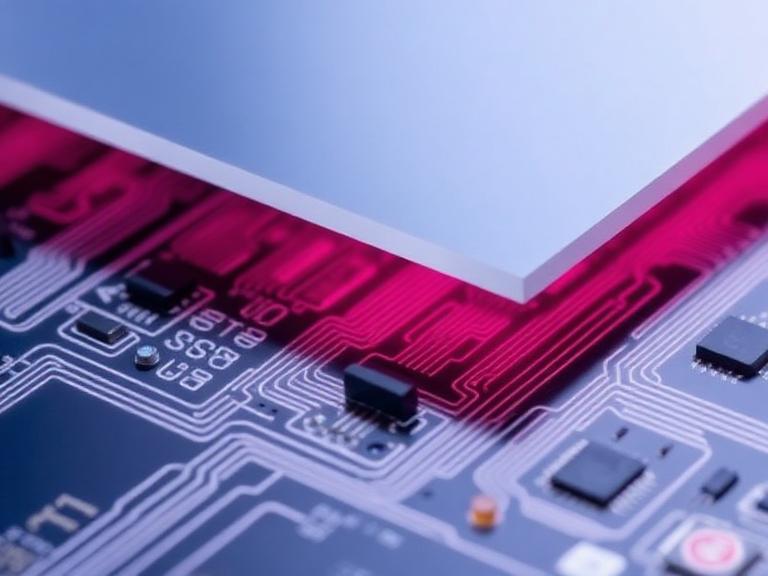
After a PCB is fully populated with components, it must be tested. Test engineers build complex “bed-of-nails” fixtures that press hundreds of metallic probes against the circuit board. The chassis and base plates of these fixtures must be mechanically rigid to ensure the probes hit microscopic test pads perfectly. However, the base must also protect the board from static. ESD Bakelite is the industry standard for machining these complex test jigs. It machines cleanly without chipping, holds tight dimensional tolerances, and guarantees that the act of snapping the board into the fixture does not induce a lethal static shock.
3. SMT Assembly Pallets and Wave Soldering Carriers
During Surface Mount Technology (SMT) and through-hole assembly, bare boards are placed onto carrier pallets that travel along conveyor belts and through soldering ovens. As these pallets slide against rubber belts and metal rails, standard plastics build up triboelectric charges. Using ESD Bakelite for low-to-medium temperature carrier pallets ensures the boards remain grounded throughout the logistical transport phase. Note: For extremely high-temperature lead-free wave soldering, engineers often upgrade to specialized g10 material properties or Durostone, but for standard routing, ESD Bakelite is significantly more cost-effective.
4. Electronic Assembly Workstation Surfaces and Staging Jigs
Operators handling raw RAM modules, microprocessors, and unhoused PCBs require static-safe staging areas. While thin ESD rubber mats are common, they are easily sliced, burned, and deformed in heavy mechanical assembly areas. Thick antistatic bakelite sheets are frequently machined into custom workstation tops, shelving dividers, and holding racks. For commercial users, this provides an indestructible, flat surface that can withstand dropped tools, aggressive chemical flux cleaners, and heavy mechanical pressing without ever losing its static dissipative properties.
5. Cleanroom Machinery Components
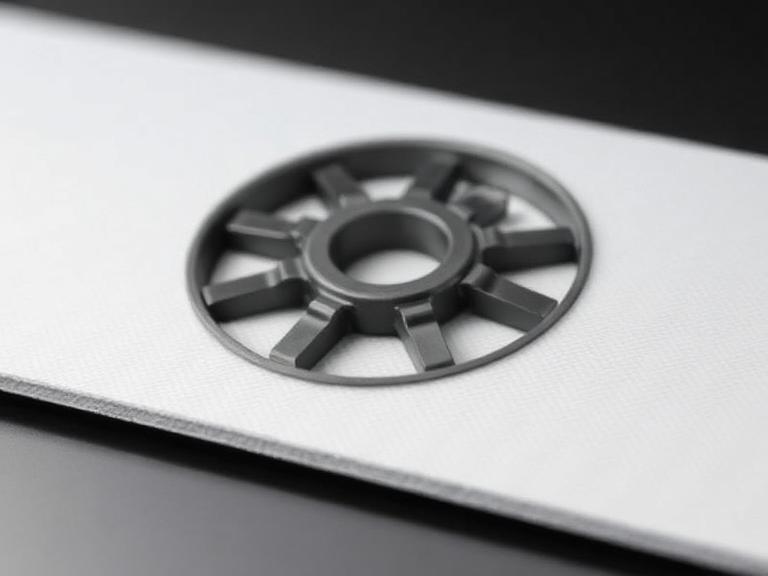
Automated optical inspection (AOI) machines, robotic pick-and-place arms, and cleanroom conveyors contain hundreds of non-metallic moving parts. Pulleys, gears, guides, and sensor brackets made from standard nylon or Delrin generate immense static fields purely through operational friction. By machining these customized structural components out of antistatic bakelite, automation engineers effectively ground the moving parts of the machine, creating a passive static-control environment inside the equipment chassis.
Commercial Benefits of Upgrading
Is it actually worth buying ESD Bakelite over standard phenolic laminate? Emphatically, yes. The price premium for the antistatic agent is negligible compared to the cost of scrapping a fully populated, highly dense multi-layer circuit board.
Furthermore, ESD Bakelite possesses incredible dimensional stability. It does not warp under moderate heat, it resists corrosive soldering fluxes, and it can be CNC machined to tolerances of ±0.05mm. For fixture builders, this means you build a test jig once, and it performs identically on its 100,000th cycle as it did on day one.
Limitations: When to Look Elsewhere
We must present practical commercial judgment: ESD Bakelite is not a miracle material. It has three distinct limitations. First, it is brittle. If you drop a thin sheet on a concrete floor, it will chip or crack. Second, it has poor arc resistance; it should never be used in high-voltage switchgear environments. Third, its thermal endurance is relatively low compared to glass-epoxy composites. It operates safely up to roughly 130°C. If your application involves prolonged exposure to 260°C lead-free solder waves, you must graduate to heavy-duty epoxy fiberglass sheet manufacturers for FR4 or G10 substrates.
Who Should Use It & Who Does Not Need It
For commercial users: PCB fabricators, SMT assembly houses, test fixture engineering firms, and cleanroom automation designers must rely heavily on these materials to maintain ISO 9001 and ESD S20.20 compliance. If you are building jigs that will touch exposed silicon, this is mandatory.
Who does not need it: If you are manufacturing high-voltage transformers, constructing heavy load-bearing mechanical supports, or building consumer appliance casings, the antistatic properties offer zero value. You are better served consulting a standard insulation board manufacturer or researching standard fr4 sheet manufacturers for materials prioritizing raw dielectric and tensile strength.
Common Procurement Mistakes
The most catastrophic mistake we see in procurement is visually identifying materials. A massive industry myth is that “black bakelite is antistatic.” This is false. Standard insulative bakelite is routinely dyed black purely for aesthetics or optical blocking. If a purchasing manager buys cheap black bakelite assuming it is ESD-safe, they will completely compromise the factory’s static control program. You must explicitly specify “Static Dissipative” or “Antistatic” and demand a manufacturer’s data sheet verifying surface resistivity.
Crucial Buying Considerations
When sourcing these materials for heavy-duty applications, apply the following technical criteria to your vendor evaluation:
- Volume vs. Surface Resistivity: Ensure the antistatic properties are homogenous (volume) rather than just a topical spray coating. If it is only a surface coating, machining the sheet will expose insulative raw material, defeating the entire purpose.
- Thickness Tolerances: For test fixtures (ICT/FCT), extreme thickness uniformity is required. Demand sheets with a thickness tolerance of ±0.1mm.
- Machinability: Low-quality phenolic resins will delaminate or release toxic formaldehyde dust during high-speed CNC routing. Sourcing from reputable, clean-manufacturing facilities reduces tool wear and operator hazard.
Expert Recommendation from Sjcncinsulation
In most professional situations, treating structural polymers as an afterthought is the fastest way to hemorrhage capital through scrapped electronics. We recommend making antistatic bakelite the baseline requirement for any tooling that physically contacts bare PCBs on your factory floor.
Sjcncinsulation is a modern manufacturing enterprise specializing in the production, processing, sales, and service of insulation materials and plastic sheets. The company is located in Houqiao Industrial Park, Xinwu District, Wuxi City, Jiangsu Province, China. We are supported by a young and highly skilled team of engineers with strong R&D capabilities, as well as a professional sales team. If you require verified, high-tolerance ESD Bakelite or custom-machined fr4 epoxy fiberglass rod components to optimize your assembly yields, our facility is engineered to supply you with uncompromising quality at scale.
Data and Comparison Tables
| Property | Specification Range | Industry Significance |
|---|---|---|
| Surface Resistivity | 106 – 109 Ω/sq | Ensures safe, controlled bleed-off of static charge. |
| Continuous Operating Temp | 130°C (Max) | Suitable for staging, testing, and low-temp transit. |
| Density | 1.45 g/cm³ | Provides excellent mechanical rigidity for test fixtures. |
| Machinability | Excellent | Can be routed, drilled, and milled with standard carbide tooling. |
| Material Type | ESD Protection | Heat Resistance | Relative Cost | Best Use Case |
|---|---|---|---|---|
| Standard Bakelite | None (Insulative) | Moderate (130°C) | Lowest ($) | Low-voltage structural supports, non-electronic jigs. |
| Antistatic Bakelite | Excellent (106-109 Ω) | Moderate (130°C) | Moderate ($$) | ICT/FCT test fixtures, PCB drilling backup boards. |
| ESD FR4 / G10 | Excellent (106-109 Ω) | High (180°C – 200°C) | Premium ($$$) | Wave soldering pallets, heavy structural carriers. |
| Pros (Advantages) | Cons (Limitations) |
|---|---|
| Drastically reduces catastrophic static damage to PCBs. | Brittle structure; prone to chipping if dropped or mishandled. |
| Highly economical compared to composite fiberglass (FR4). | Cannot withstand prolonged exposure to lead-free wave soldering temperatures. |
| Excellent dimensional stability; resists warping over time. | Emits strong phenolic odors when aggressively machined without coolant. |
| Machines easily with crisp, clean edges for complex jigs. | Poor arc resistance; unsuitable for high-voltage power transmission. |
| Your Application | Required Material Spec | Why This Matters |
|---|---|---|
| Bed-of-Nails Test Fixtures | Volume Conductive ESD Bakelite | Routing internal cavities must not expose insulative core material. |
| Conveyor Belt SMT Pallets | High-Density ESD Bakelite | Must resist flexing when holding heavily populated PCBs. |
| High-Temp Wave Solder Masks | ESD FR4 or Durostone | Bakelite will blister and degrade if exposed directly to molten solder waves. |
Frequently Asked Questions
In most professional situations, a true antistatic (or static dissipative) bakelite sheet maintains a surface resistivity between 106 and 109 ohms per square. This specific range allows the material to bleed off electrostatic charges slowly and safely, preventing rapid discharges that destroy electronic components.
For low-temperature or brief exposure processes, yes. However, for continuous heavy-duty wave soldering applications exceeding 130°C for prolonged periods, we recommend upgrading to Durostone or high-temp FR4 composites to prevent warping and degradation.
No. This is a dangerous industry myth. Standard bakelite is often dyed black for aesthetic or light-blocking purposes. True antistatic bakelite contains specialized carbon or conductive additives throughout the resin matrix to achieve specific dissipative properties. You must verify the resistivity with a megohmmeter before use in sensitive areas.
Authoritative References & Industry Standards
To ensure your manufacturing facility remains compliant with global electrostatic discharge protocols and material testing standards, we advise consulting the following authoritative organizations:
- Electrostatic Discharge Association (ESDA) – Publishing the definitive ANSI/ESD S20.20 standards for developing and maintaining an ESD control program in electronics manufacturing.
- IPC – Association Connecting Electronics Industries – Providing globally recognized acceptability standards for printed board assemblies, tooling, and test fixture design.
- IEEE Standards Association – Offering rigorous testing methodologies for the dielectric strength and surface resistivity of insulating and dissipative polymers.