
When engineering high-volume electrical components, selecting the correct substrate is never a trivial decision. In the manufacturing world, a seemingly minor error in material specification can grind an automated stamping line to an absolute halt. Today, one of the most frequent debates we encounter on the factory floor revolves around PFCP207 vs Standard Bakelite Sheet. While both materials belong to the phenolic paper laminate family, their commercial applications, machining characteristics, and electrical thresholds are drastically different.
From our experience supplying Tier 1 electronics manufacturers, treating these two materials as interchangeable is a costly mistake. Standard bakelite is an excellent legacy material, but it possesses limitations that modern automated manufacturing simply cannot tolerate. The core objective of this guide is to break down the exact technical distinctions, helping you determine whether it is actually worth using, buying, or upgrading to PFCP207 for your specific assembly line.
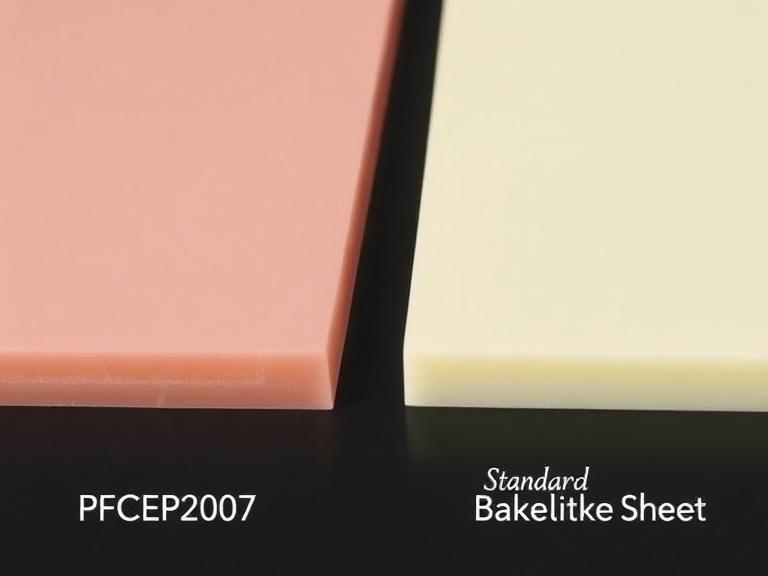
Quick Answer: Which Should You Choose?
If you need to stamp, shear, or punch complex electrical parts at room temperature without the board splintering, we recommend PFCP207. Its advanced “cold punching” capability and superior moisture resistance make it the professional choice for switchgear, PCB backing, and precision lamp head insulation. Conversely, if your application involves low-voltage test fixtures, structural jigs, or mechanical supports where the material can be routed rather than punched, Standard Bakelite Sheet (PFCP201) is perfectly adequate and will save you considerable procurement capital.
Table of Contents
- What It Is: Technical Definitions
- Quick Summary Table
- How It Works: The Manufacturing Differences
- The 5 Pros and Cons: PFCP207 vs Standard Bakelite Sheet
- Comparison Table: Technical Specifications
- Who Should Use PFCP207
- Who Does Not Need PFCP207
- Common Mistakes in Material Selection
- Commercial Buying Considerations
- Expert Recommendation from Sjcncinsulation
- Frequently Asked Questions
What It Is: Technical Definitions
What is a Standard Bakelite Sheet?
Standard bakelite—technically classified as PFCP201 under IEC 60893 standards, or Grade X/XP under NEMA classifications—is the original workhorse of the insulation industry. It is a rigid, brittle composite created by applying heat and pressure to layers of cellulose paper impregnated with a basic phenol-formaldehyde resin. In most professional situations, standard bakelite is utilized strictly for mechanical applications. Its defining physical trait is its brittleness; attempting to punch or shear standard bakelite at room temperature will result in catastrophic delamination and jagged, unusable edges.
What is PFCP207?
PFCP207 is a highly refined, advanced grade of phenolic paper laminate engineered specifically to solve the brittleness problem. It is colloquially known in the industry as a “cold punching” or “cold blanking” board. By integrating specialized plasticizers into the phenolic resin matrix during production, PFCP207 retains microscopic flexibility. This allows manufacturers to aggressively punch, shear, and stamp the material at ambient room temperature (20°C to 25°C) while retaining perfectly smooth edges. Furthermore, PFCP207 is chemically formulated to offer significantly higher electrical breakdown voltages in high-humidity environments.
Quick Summary Table
| Feature | Standard Bakelite (PFCP201) | PFCP207 (Cold Punching Bakelite) |
|---|---|---|
| Primary Use Case | Low-voltage structural supports, drilling jigs | High-volume electrical stamping, lamp heads |
| Punching Requirement | Must be heated to 100°C – 130°C before punching | Can be cold-punched at room temperature |
| Moisture Resistance | Moderate to Poor | Excellent (Low water absorption) |
| Edge Quality (Punched) | Jagged, prone to delamination if cold | Smooth, clean edges with zero splintering |
| Relative Cost | Highly economical | Premium priced due to chemical additives |
How It Works: The Manufacturing Differences
To truly understand the debate between PFCP207 vs Standard Bakelite Sheet, one must look at the chemical engineering that occurs during the curing process. Both materials begin as rolls of high-quality kraft paper. This paper is pulled through a vat of liquid phenolic resin in a continuous impregnation line, then partially dried into a “pre-preg” state.
For standard bakelite, the resin is a standard, rigid thermoset formula. When the pre-preg layers are stacked and pressed under massive hydraulic force at roughly 150°C, the molecules cross-link into a completely inflexible grid. This creates high compressive strength but zero elasticity.
When manufacturing PFCP207, the resin bath is fundamentally different. Plasticizers and specialized flexibilizers are introduced into the phenol-formaldehyde mixture. During the hot-pressing phase, these additives prevent the polymer chains from locking into a completely rigid state. The result is a board that feels identical to standard bakelite but absorbs the kinetic shock of a 50-ton punch press without fracturing. Understanding these chemical nuances is just as critical as performing a thorough epoxy sheet price analysis when forecasting your annual manufacturing budget.
The 5 Pros and Cons: PFCP207 vs Standard Bakelite Sheet
For commercial users scaling up their production lines, evaluating the trade-offs between these two materials is mandatory. Here is our professional breakdown of the five critical pros and cons.
1. Machinability: Room Temperature Punching vs. Heated Tooling
Pro (PFCP207): The absolute greatest advantage of PFCP207 is its cold punching capability. You can feed this material directly into an automated stamping press at room temperature. This eliminates the need for expensive inline industrial ovens, drastically increasing Units Per Hour (UPH) and streamlining the factory floor.
Con (Standard Bakelite): Standard bakelite requires pre-heating to 100°C–130°C before punching. If the board cools down mid-process, it will splinter, ruining the part and potentially damaging the stamping die. The energy costs and time required for heating are significant operational burdens.
2. Environmental Stability: Moisture Resistance
Pro (PFCP207): PFCP207 features a highly dense, plasticized resin matrix that actively repels water. In tropical climates or outdoor industrial enclosures, PFCP207 maintains its dielectric strength because it simply does not absorb ambient humidity.
Con (Standard Bakelite): Standard PFCP201 has higher water absorption rates. Over time, moisture ingress creates conductive pathways within the paper fibers, leading to electrical shorts and tracking failures.
3. Electrical Performance: Dielectric Strength
Pro (PFCP207): PFCP207 is designed to survive high-voltage stresses. It exhibits superior breakdown voltage parallel to the lamination, making it a reliable barrier in switchboards, transformer housings, and intricate lamp head assemblies.
Con (Standard Bakelite): While standard bakelite is fine for low-voltage (under 250V) household applications or purely mechanical spacing, it should never be trusted as a primary insulator in high-voltage industrial machinery.
4. Tooling Wear and Tear
Pro (PFCP207): Because it absorbs impact gracefully, cold punching PFCP207 produces significantly less abrasive dust. Clean punches mean your expensive tungsten carbide stamping dies remain sharp for hundreds of thousands of cycles longer than they would with brittle materials.
Con (Standard Bakelite): The sheer brittleness of standard bakelite creates microscopic shrapnel during machining. This abrasive dust wears down cutting tools, drill bits, and punch dies at an alarming rate, increasing your consumable tooling costs.
5. Cost Efficiency vs. Over-engineering
Pro (Standard Bakelite): Standard bakelite is incredibly cheap. If you are building a CNC routing jig, a worktable surface, or a low-voltage test rig, PFCP201 provides massive structural strength for pennies on the dollar.
Con (PFCP207): PFCP207 is a premium product. For beginners or hobbyists doing one-off projects with a hand router, the cold-punching additives offer zero value. Using PFCP207 for a basic mechanical jig is a textbook case of commercial over-engineering.
| Evaluation Metric | Advantage Goes To | Professional Reasoning |
|---|---|---|
| Automated Stamping Speed | PFCP207 | Eliminates heating time; zero edge splintering during cold punches. |
| Raw Material Cost | Standard Bakelite | Lacks expensive plasticizers, making it highly economical for bulk mechanical use. |
| Dielectric Reliability | PFCP207 | Maintains high breakdown voltage even after exposure to heavy humidity. |
| Tooling Lifespan | PFCP207 | Clean shearing reduces abrasive friction on expensive punch dies. |
Comparison Table: Technical Specifications
To highlight exactly why PFCP207 dominates in electrical applications, we must compare the empirical data. Below are the standard performance metrics observed in our testing facilities.
| Technical Property | Standard Bakelite (PFCP201) | Cold Punching Bakelite (PFCP207) |
|---|---|---|
| Flexural Strength (Perpendicular) | ≥ 135 MPa | ≥ 80 MPa (Softer for punching) |
| Breakdown Voltage (Parallel, in Oil 90°C) | Not reliably rated for high voltage | ≥ 25 KV |
| Water Absorption (1mm thickness) | Up to 450 mg | ≤ 69 mg (Highly moisture resistant) |
| Punching Temperature Requirement | 100°C – 130°C | 20°C – 25°C (Room Temperature) |
Who Should Use PFCP207
For heavy-duty applications requiring rapid assembly, PFCP207 is indispensable. We strongly recommend PFCP207 for manufacturers producing intricate electrical components via high-speed stamping presses. Typical applications include lamp head insulators, micro-motor brush holders, low-tension switchgear panels, and high-humidity telecommunications backing boards. If your facility measures production in tens of thousands of units per hour, PFCP207 is one of the most efficient electrical insulation sheet materials on the market.
Who Does Not Need PFCP207
In most professional situations involving zero electrical load, PFCP207 is an unnecessary expense. If your operation relies on CNC routers, laser cutters, or traditional drills rather than punch presses, the cold-punching feature provides no operational benefit. Mechanical engineers designing structural supports, drilling backup boards, or custom manufacturing jigs should stick to standard PFCP201 bakelite. Alternatively, if extreme chemical resistance is needed, engineers might explore composite panel applications instead of paper laminates.
Common Mistakes in Material Selection
The most catastrophic mistake we see in procurement is prioritizing the raw per-sheet cost over the total cost of production. A procurement manager will order standard PFCP201 to save 15% on material costs, only to watch the factory floor scrap 30% of the boards due to edge cracking during the stamping process. Furthermore, substituting a standard grade into a high-humidity environment will inevitably lead to warranty claims when the components short-circuit. Always evaluate the cost of failures when conducting price comparisons, just as you would when reviewing a fiberglass sheets cost guide.
Commercial Buying Considerations
When you are ready to place a bulk order, verifying the supply chain is critical. Ensure your manufacturer provides batch-testing certificates proving the breakdown voltage. Because PFCP207 contains specialized plasticizers, it has specific storage requirements; it must be stored flat in a dry, climate-controlled warehouse to prevent warping over time. If your supplier cannot guarantee traceable IEC 60893-3-4 compliance, walk away.
| Buying Checklist | Actionable Advice for Procurement |
|---|---|
| Verify Standard Compliance | Demand documentation proving the material meets IEC PFCP207 or NEMA XPC standards. |
| Request Samples for Tooling | Run a 100-piece sample through your actual punch press before committing to a multi-ton order. |
| Check Moisture Ratings | Ensure the water absorption rating is well below the standard bakelite threshold (aim for under 100mg). |
| Supplier Manufacturing Capacity | Ensure the supplier actually manufactures the raw sheet, rather than just reselling it, to control costs. |
Expert Recommendation from Sjcncinsulation
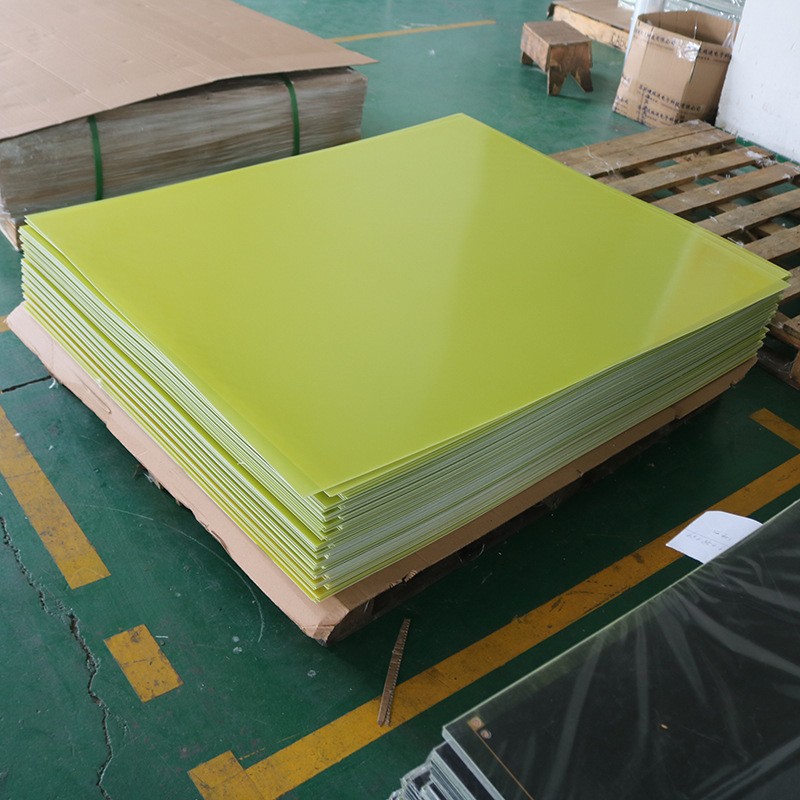
Sjcncinsulation is a modern manufacturing enterprise specializing in the production, processing, sales, and service of insulation materials and plastic sheets. The company is located in Houqiao Industrial Park, Xinwu District, Wuxi City, Jiangsu Province, China. We are supported by a young and highly skilled team of engineers with strong R&D capabilities, as well as a professional sales team.
From our experience supplying global manufacturers, attempting to cut corners with standard bakelite on a stamping line is a false economy. We recommend PFCP207 without hesitation for any commercial user operating punch presses or building electrical components exposed to humidity. The upfront material premium is instantly recovered through faster production speeds, zero pre-heating energy costs, and a massive reduction in scrapped parts. If your current standard bakelite is splintering, upgrading to PFCP207 is absolutely worth the investment. For clients requiring completely different thermal profiles, we also recommend exploring our smc insulation board solutions.
Frequently Asked Questions
Authoritative References & Standards
To ensure engineering accuracy, the technical specifications in this guide align with the standards established by the following authoritative organizations:
- International Electrotechnical Commission (IEC) – Defining the global 60893-3-4 specifications for rigid industrial laminated sheets based on thermosetting resins.
- National Electrical Manufacturers Association (NEMA) – Providing equivalent North American material grading (X, XP, XPC) for industrial phenolic laminates.
- Institute of Electrical and Electronics Engineers (IEEE) – Establishing the foundational testing protocols for dielectric breakdown and insulation resistance in high-voltage environments.