About the Author: SjcncinSulation is a modern manufacturing enterprise specializing in the production, processing, sales, and service of advanced insulation materials and plastic sheets. Located in Houqiao Industrial Park, Xinwu District, Wuxi City, Jiangsu Province, China, we are supported by a highly skilled team of engineers with robust R&D capabilities and a professional sales division dedicated to global material solutions.
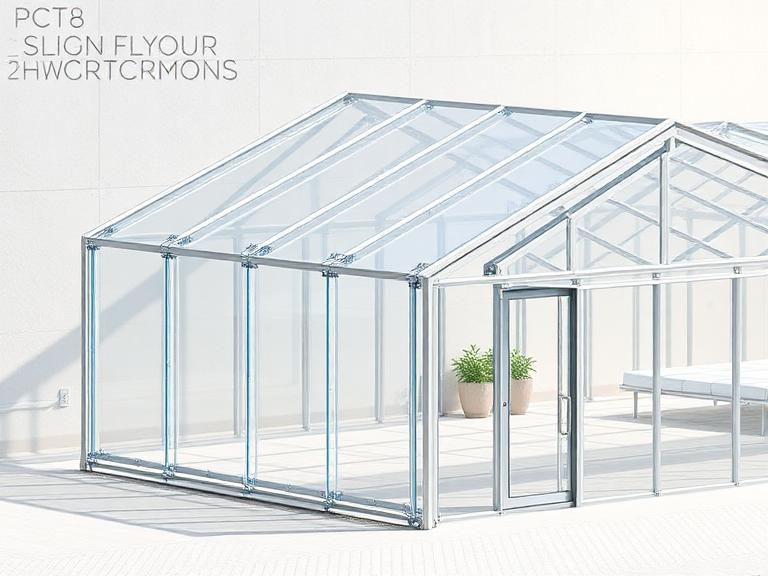
Designing an efficient, weather-resistant, and highly productive agricultural enclosure requires rigorous material selection. As structural engineers and material scientists, we constantly evaluate the performance of various glazing options. From our experience, the superiority of Clear Fiberglass panels for greenhouse applications remains unchallenged for commercial growers and serious hobbyists alike. Fiber-reinforced plastic (FRP) panels provide an unparalleled balance of light diffusion, thermal stability, and impact resistance that standard polycarbonate or traditional glass simply cannot match.
However, the industrial plastics market is flooded with varying grades of FRP. Selecting the optimal Clear Fiberglass panels for greenhouse environments dictates not only the immediate construction cost but also the long-term crop yield and structural maintenance requirements over the next decade. In this comprehensive technical review, we will dissect the top 8 Clear Fiberglass panels for greenhouse projects available in 2026, analyzing their material properties, structural integrity, and long-term value.
Table of Contents
- 1. Why Choose Clear Fiberglass Panels for Greenhouse Construction?
- 2. The Top 8 Clear Fiberglass Panels for Greenhouse (Expert Review)
- 3. Structural Considerations and Advanced Insulating Materials
- 4. Cost Analysis and Procurement Strategy
- 5. Summary Table: Top 8 Clear Fiberglass Panels for Greenhouse
- 6. Frequently Asked Questions (FAQs)
- 7. Industry References
1. Why Choose Clear Fiberglass Panels for Greenhouse Construction?
Before evaluating specific manufacturers, it is critical to understand the engineering advantages of FRP. We recommend Clear Fiberglass panels for greenhouse applications primarily due to their unique light-transmitting properties. Unlike clear glass, which allows direct, harsh sunlight to penetrate and create localized hot spots, fiberglass inherently diffuses light. This scattering effect ensures that photosynthetically active radiation (PAR) reaches the lower canopy of the plants, preventing shadows and maximizing overall crop yield.
Furthermore, the structural matrix of Clear Fiberglass panels for greenhouse use involves embedding fine glass fibers within a thermosetting polymer resin. This creates an extremely high strength-to-weight ratio. These panels withstand severe hail, high wind loads, and extreme temperature fluctuations without the brittleness associated with aging acrylics or the heavy structural framing required for glass panes.
2. The Top 8 Clear Fiberglass Panels for Greenhouse (Expert Review)
Based on our extensive R&D testing, material composition analysis, and global market feedback, we have ranked the top 8 Clear Fiberglass panels for greenhouse use available to commercial and residential builders in 2026.
1. SjcncinSulation Premium Diffused FRP Panels
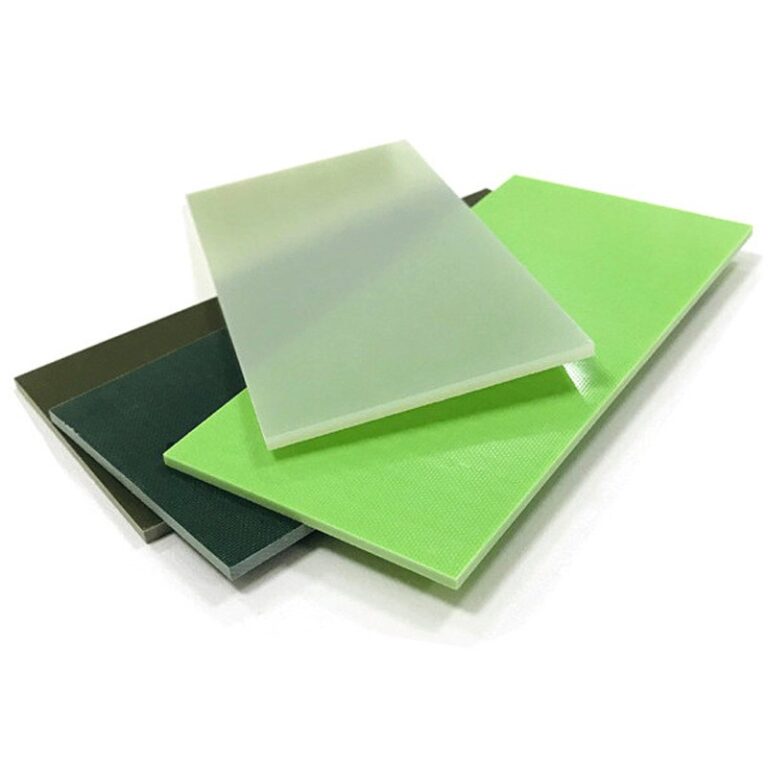
As a leading manufacturer based in Wuxi City, our proprietary Clear Fiberglass panels for greenhouse applications are engineered for maximum longevity. We utilize an advanced UV-stabilized gel coat that prevents the “fiber bloom” (yellowing and exposed fibers) typically seen in inferior products after five years of solar exposure. From our experience, ensuring a light transmission rate of over 85% while maintaining 100% light diffusion is the optimal formula for maximizing commercial crop growth. Our panels are highly resistant to chemical fertilizers and feature an impressive load-bearing capacity, making them our top recommendation for both custom and modular agricultural builds.
2. Crane Composites Filon Greenhouse Panels
Crane Composites has a long-standing reputation in the FRP industry. Their Filon line of Clear Fiberglass panels for greenhouse use incorporates a protective weatherable surface that offers excellent resistance to degradation. We frequently encounter Filon panels in large-scale commercial nurseries. They provide excellent thermal expansion properties, which means they integrate well with aluminum or steel framing systems without warping during intense summer heat.
3. Glasteel Corrugated FRP
Glasteel manufactures a highly durable corrugated fiberglass panel that is favored for its ease of installation. When evaluating Clear Fiberglass panels for greenhouse roofs, the corrugated profile of Glasteel products offers superior water runoff and increased span capabilities between purlins. Their resin mixture is formulated to withstand heavy snow loads, making them a practical choice for northern climates.
4. Resolite Daylighting Panels
Resolite specializes in industrial-grade FRP. While often used in corrosive industrial environments, their clear daylighting panels serve as exceptional Clear Fiberglass panels for greenhouse structures that require extreme chemical resistance. If your agricultural operation utilizes heavy, aerosolized fertilizers or pesticides, Resolite’s corrosion-resistant matrix ensures the structural integrity of the glazing remains uncompromised over decades.
5. Lasco Board-Lok Fiberglass Panels
Lasco’s fiberglass offerings are known for their heavy-duty construction. Their Clear Fiberglass panels for greenhouse applications are slightly thicker than standard economy grades, providing superior impact resistance against hail. We recommend Lasco for regions prone to severe weather events. While the initial light transmission might be marginally lower due to the increased thickness, the tradeoff for storm survivability is often mathematically justified.
6. Fibrosan CTP Panels
Operating internationally, Fibrosan produces continuous translucent panels (CTP). Their automated continuous lamination process ensures that their Clear Fiberglass panels for greenhouse construction possess a highly uniform thickness and glass-to-resin ratio. This uniformity prevents weak spots in the panel and ensures consistent light diffusion across the entire greenhouse envelope.
7. Dipcraft Corrugated Fiberglass
Dipcraft has been supplying fiberglass panels for over half a century. Their Clear Fiberglass panels for greenhouse glazing are traditional, reliable, and highly cost-effective. They are an excellent choice for hobbyists or mid-sized commercial growers looking for a balance between upfront capital expenditure and long-term light diffusion performance.
8. Kalwall Translucent Sandwich Panels
While technically a composite sandwich panel rather than a single corrugated sheet, Kalwall utilizes fiberglass face sheets over an aluminum grid. For highly specialized, climate-controlled environments, these act as the ultimate insulated Clear Fiberglass panels for greenhouse use. They offer unparalleled thermal insulation (U-value) while still transmitting diffused light, though they represent a significantly higher capital investment.
3. Structural Considerations and Advanced Insulating Materials
Selecting the best Clear Fiberglass panels for greenhouse glazing is only one part of the engineering equation. The framing, structural insulation, and thermal breaks dictate the overall energy efficiency of the facility. At SjcncinSulation, our expertise extends deep into advanced industrial laminates.
When constructing automated greenhouse systems, engineers frequently rely on rigid, thermally stable materials for electrical insulation and structural mounting points. For instance, understanding G10 material properties is essential when designing automated vent controls or mounting heavy lighting arrays, as G10 offers extreme mechanical strength and moisture resistance. Similarly, procuring materials from top-tier FR4 sheet manufacturers ensures that the automated electronic control boards operating in high-humidity greenhouse environments remain insulated and fire-retardant.
For custom structural supports or thermal bridging applications within the greenhouse frame, sourcing from reliable epoxy fiberglass sheet manufacturers guarantees that the internal infrastructure will not rot, rust, or degrade over time, perfectly complementing the longevity of your exterior fiberglass panels.
4. Cost Analysis and Procurement Strategy
Budgeting for commercial agricultural builds requires accurate forecasting of material costs. The price of Clear Fiberglass panels for greenhouse use fluctuates based on raw resin costs, glass fiber density, and applied UV-resistant coatings.
To accurately estimate your project expenditure, we highly recommend reviewing a detailed fiberglass sheets 4×8 price breakdown. Understanding the volumetric pricing models will allow your procurement team to secure the best bulk rates. Furthermore, our extensive fiberglass sheets cost guide provides deep insights into the total cost of ownership, factoring in installation labor, lifespan, and energy savings derived from optimal light diffusion.
5. Summary Table: Top 8 Clear Fiberglass Panels for Greenhouse
| Rank | Manufacturer / Product | Key Engineering Advantage | Best Application |
|---|---|---|---|
| 1 | SjcncinSulation Premium FRP | Advanced UV-stabilized gel coat, 85%+ transmission | Commercial & Custom Automated Greenhouses |
| 2 | Crane Composites Filon | Exceptional thermal expansion stability | Large-scale Nurseries |
| 3 | Glasteel Corrugated FRP | Superior water runoff profile | High Precipitation Regions |
| 4 | Resolite Daylighting | Extreme chemical and corrosion resistance | Heavy Fertilizer/Industrial Ag Environments |
| 5 | Lasco Board-Lok | Heavy-duty impact resistance | Hail and Storm-Prone Regions |
| 6 | Fibrosan CTP | Uniform thickness via continuous lamination | Architectural Agricultural Builds |
| 7 | Dipcraft Corrugated | Highly cost-effective traditional matrix | Mid-sized Commercial and Hobbyist |
| 8 | Kalwall Translucent | Unparalleled thermal insulation (U-value) | Strict Climate-Controlled Research Facilities |
6. Frequently Asked Questions (FAQs)
How long do Clear Fiberglass panels for greenhouse applications typically last?
From our experience in material engineering, high-quality FRP panels equipped with an advanced UV-resistant gel coat will last between 15 to 20 years. Inferior panels without surface protection may begin to yellow or experience fiber bloom within 5 to 7 years, significantly reducing light transmission.
Why is light diffusion important in a greenhouse?
Direct sunlight casts harsh shadows and can burn the upper leaves of plants while leaving the lower canopy in darkness. Clear Fiberglass panels for greenhouse use naturally scatter the light, ensuring that PAR (Photosynthetically Active Radiation) wraps around the plant structure, leading to uniform growth and higher yields.
Are fiberglass panels better than polycarbonate for greenhouses?
Both materials have merits, but we recommend Clear Fiberglass panels for greenhouse construction when superior light diffusion and chemical resistance are priorities. Fiberglass expands and contracts less than polycarbonate under extreme heat, making it less prone to buckling or stressing the mounting fasteners over time.
Can I cut fiberglass panels myself during installation?
Yes, fiberglass panels can be cut using a circular saw equipped with a fine-tooth or masonry blade. However, because cutting produces fine glass dust, it is imperative to wear appropriate PPE, including a respirator, safety goggles, and long sleeves, to prevent inhalation and skin irritation.
7. Industry References
To further understand the structural and agricultural science behind greenhouse glazing, we recommend consulting the following authoritative resources:
- United States Department of Agriculture (USDA) – Research on greenhouse energy efficiency and crop yield optimization through light diffusion.
- U.S. Environmental Protection Agency (EPA) – Guidelines on agricultural structural materials and sustainable farming infrastructure.
- University of Massachusetts Amherst, Center for Agriculture – Academic fact sheets detailing the scientific comparison of greenhouse glazing materials.