FR4 Sheet Supplier: What You Can Actually Buy
If you are searching for an FR4 sheet supplier, you are usually trying to answer three questions at once: what grade of FR4 is right for the job, what sheet sizes and thicknesses are available, and whether the supplier can machine the material into finished parts rather than just ship flat panels.
This page answers those questions directly, using the specifications SJ TECH publishes for its FR4 epoxy sheet range, and explains how to compare suppliers on the points that affect your production line.
What FR4 Sheet Is and Why the Grade Matters
FR4 is a NEMA grade designation for a glass-reinforced epoxy laminate. The base is a woven glass fabric that provides mechanical strength and dimensional stability; the binder is an epoxy resin engineered for flame retardancy, typically meeting the UL94 V-0 standard.
In IEC terms, the material SJ TECH supplies as FR4 epoxy sheet is classified as EPGC202. Compared with standard G10 or EPGC201 material, EPGC202 offers improved flame-retardant properties and is commonly classified as an FR4 insulation board.
That distinction matters when you are comparing quotes. Two suppliers can both say "FR4 sheet" while offering different flame ratings, different glass transition temperatures, or different thickness tolerances. Ask for the IEC or NEMA grade in writing before you compare price per square metre.
FR4 Sheet Specifications at a Glance
The following table summarises the published product data for SJ TECH FR4 epoxy sheet (EPGC202). Values are typical and may vary with thickness, batch, test conditions and customer specification.
| Item | Specification |
|---|---|
| Product name | FR4 Epoxy Sheet |
| IEC grade | EPGC202 |
| Material | Woven glass fiber cloth and epoxy resin |
| Material structure | Glass cloth reinforced epoxy laminate |
| Standard color | Green |
| Optional colors | Yellow, black or custom colors |
| Flame retardancy | V-0 typical |
| Main function | Electrical insulation and structural support |
| Supply form | Full sheets, cut panels and CNC-machined parts |
| Common sheet size | 1020 × 1220 mm |
| Large sheet size | 1220 × 2440 mm |
| Thickness | Multiple thicknesses available |
| Cut-to-size service | Available |
| CNC machined parts | Available |
| Custom shape | According to drawing or sample |
Typical mechanical and electrical properties
| Property | Direction | Test method | Unit | Typical value |
|---|---|---|---|---|
| Water absorption | — | — | mg | 5.5 |
| Flexural strength | Lengthwise | ISO 178 | MPa | 575 |
| Flexural strength | Crosswise | ISO 178 | MPa | 515 |
| Charpy impact strength | Lengthwise | ISO 179 | kJ/m² | 76 |
| Charpy impact strength | Crosswise | ISO 179 | kJ/m² | 65 |
| Cantilever impact strength | Lengthwise | ISO 179 | kJ/m² | 72 |
| Cantilever impact strength | Crosswise | ISO 179 | kJ/m² | 63 |
| Flammability | — | IEC 60695 | Class | V-0 |
For buyers, the practical reading is this: the woven glass reinforcement gives FR4 good flexural and impact strength, so the sheet can act as both an electrical insulation material and a structural support component. That is why FR4 appears in transformer insulation boards, motor insulation components, switchgear barriers and precision-machined spacers rather than only in flat insulating panels.
Sheet Sizes, Thickness and Cut-to-Size Supply
FR4 sheet is rarely used as a full untrimmed panel. Most buyers need either a cut panel or a finished machined part, and the supplier's ability to deliver that determines how much scrap and secondary handling you absorb.
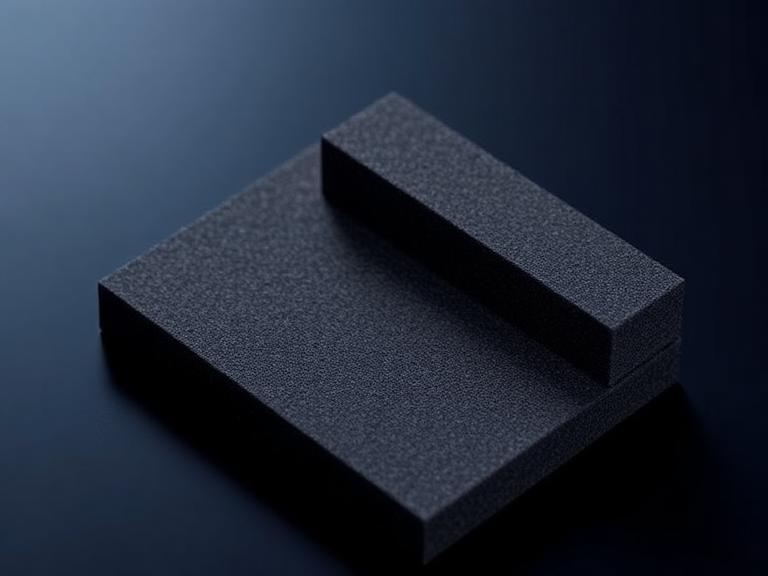
SJ TECH supplies FR4 EPGC202 in standard panel sizes or cut to the dimensions required by the customer. Common sheet size is 1020 × 1220 mm, with a large sheet size of 1220 × 2440 mm. Multiple thicknesses are available, and other sheet sizes, thicknesses and colors can be supplied subject to production and stock availability.
When you request a quotation, send the required length, width, thickness, quantity and tolerance. Thickness tolerance is set according to thickness and purchase specification, and machining tolerance depends on part structure and drawing requirements — so a drawing with clearly stated tolerances will get you a more accurate quote than a nominal size alone.
From Sheet to Finished Part: CNC Machining
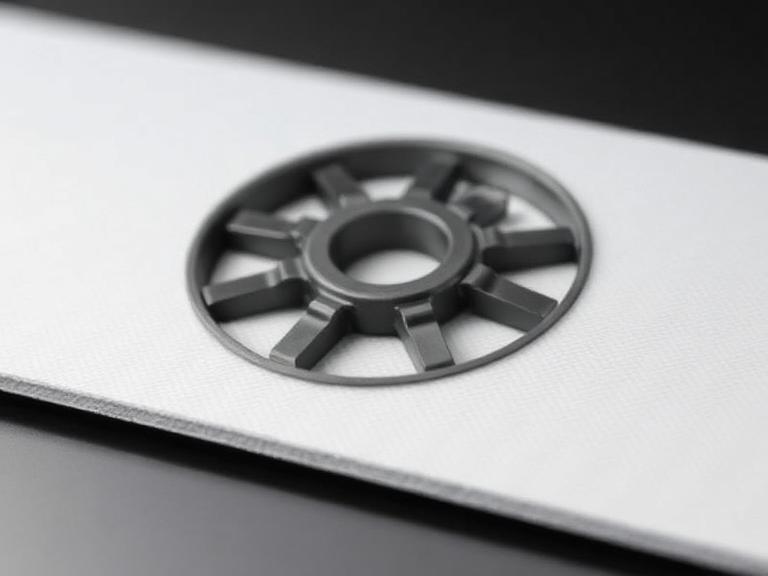
A supplier that only resells imported sheet cannot control the transition from panel to part. SJ TECH supplies FR4 epoxy glass sheets and provides cutting, milling, drilling, tapping, turning and other precision machining services for electrical insulation applications.
Typical machined FR4 items include:
- Insulating gaskets and spacers for transformers and motors
- Busbar supports and barrier plates for switchgear
- Precision-machined structural parts and mounting plates
- Custom shapes produced to drawing or sample
Because FR4 is a thermoset composite rather than a thermoplastic, machining parameters, tooling and dust control all affect edge quality and dimensional consistency. A supplier that machines FR4 routinely will usually produce cleaner edges and fewer delamination issues than a general machine shop encountering the material for the first time.
FR4 vs G10: Which Should You Specify?
Both G10 and FR4 are glass fiber reinforced epoxy resin laminates. The main difference is flame retardancy:
- G10 — standard glass epoxy laminate, non-flame retardant.
- FR4 — the flame-retardant version of G10, usually brominated, meeting flame-retardant safety standards.
In most applications that require G10, FR4 can serve as an alternative. Where flame retardancy is a requirement — for example in enclosed electrical equipment or applications subject to fire-safety review — FR4 should be specified explicitly.
If your drawing calls for G10 but your end application requires V-0 behaviour, confirm the substitution with your engineering team before ordering, because the two grades are not interchangeable in every approval process.
Other FR4 Product Forms Worth Knowing
Beyond plain FR4 sheet, buyers often need FR4 in a form that solves a specific problem.
Anti-static (ESD) FR4. ESD FR4 epoxy fiberglass laminate incorporates conductive particles into the matrix rather than applying a temporary coating, maintaining a surface resistivity of 10⁶–10⁹ Ω. It is available as single-sided, double-sided or fully encapsulated sheet, and is used for PCB test fixtures, electronic assembly workbench surfaces, battery pack insulation gaskets and precision equipment housings. Continuous operating temperature is up to 180°C with UL94 V-0 flame retardancy.
Copper clad laminate (CCL) FR4. For PCB manufacturing, FR4 CCL is a rigid laminate clad with copper foil on one or both sides. It is categorised by glass transition temperature: standard Tg (130–140°C) for cost-sensitive consumer electronics, mid Tg (150°C) for general industrial controls and power supplies, and high Tg (≥170°C) for lead-free assembly, automotive electronics and multilayer boards. Typical dielectric constant is Dk 4.2–4.8 at 1 GHz, with water absorption ≤0.10%.
Machined FR4 components. Gaskets, spacers and insulation parts produced to drawing, including custom FR4 epoxy fiberglass insulating gaskets for transformer and motor applications.
How to Vet an FR4 Sheet Supplier
Price per sheet is the easiest thing to compare and the least useful on its own. These are the checks that separate a manufacturer from a middleman:
- Grade stated in writing. Ask for the IEC or NEMA grade (for example EPGC202) and the flame rating on the quotation, not just the trade name "FR4".
- In-house machining capability. Confirm whether the supplier routes, drills and mills in-house or subcontracts. In-house capability shortens lead time and keeps tolerance responsibility in one place.
- Tolerance policy. Ask how thickness tolerance and machining tolerance are determined, and whether they are tied to your drawing.
- Batch consistency. For repeat production, ask how the supplier controls batch-to-batch variation in color, thickness and mechanical properties.
- Documentation. Request the property data you need for your technical file, and confirm which test methods the values are based on.
- Material range. A supplier that also handles G10, G11, phenolic (Bakelite), GPO-3/SMC and mica can consolidate your insulation purchases and reduce the number of incoming inspections.
What to Include in an RFQ
A complete enquiry gets a faster, more accurate response. Include:
- Material and grade (for example FR4 EPGC202, or ESD FR4)
- Sheet size or finished part dimensions
- Thickness and thickness tolerance
- Quantity, and whether you need a prototype run or repeat production
- Drawing or sample for machined parts, with critical tolerances marked
- Color preference, if relevant
- Any flame rating, electrical or documentation requirement
- Delivery destination and required date
SJ TECH supplies FR4/G10, G11/FR5, SMC composites, phenolic resin (Bakelite) and engineering plastics, and offers full-sheet supply, cut-to-size panels and drawing-based custom machining. If you need precision-machined FR4 parts or bulk sheet, send your specification and drawing for a quotation.